


Switching to eco-friendly food packaging was once a simple brand win. Today, it is a complex regulatory compliance challenge. As governments worldwide phase out and restrict PFAS (per- and polyfluoroalkyl substances), restaurants are forced to eliminate these “forever chemicals” — the traditional additives that gave molded fiber bowls robust resistance against hot oil, grease, and moisture.Yet the food service industry faces an unaddressed structural crisis: the majority of current PFAS-free packaging alternatives cannot withstand real-world delivery conditions.
Key Takeaways
- Regulatory compliance has replaced marketing benefit: PFAS bans have turned sustainable packaging from a brand advantage into a non-negotiable operational requirement for food service operators.
- Mainstream PFAS-free alternatives suffer critical performance gaps: Most budget plant-based containers fail to resist hot oil and prolonged transit, causing leakage, structural collapse, and poor customer experiences.
- True sustainability relies on material engineering, not chemical shortcuts: High-density fiber refining and water-based bio-coatings deliver reliable hot oil resistance while retaining full compostability, solving the core tradeoff of eco-packaging.
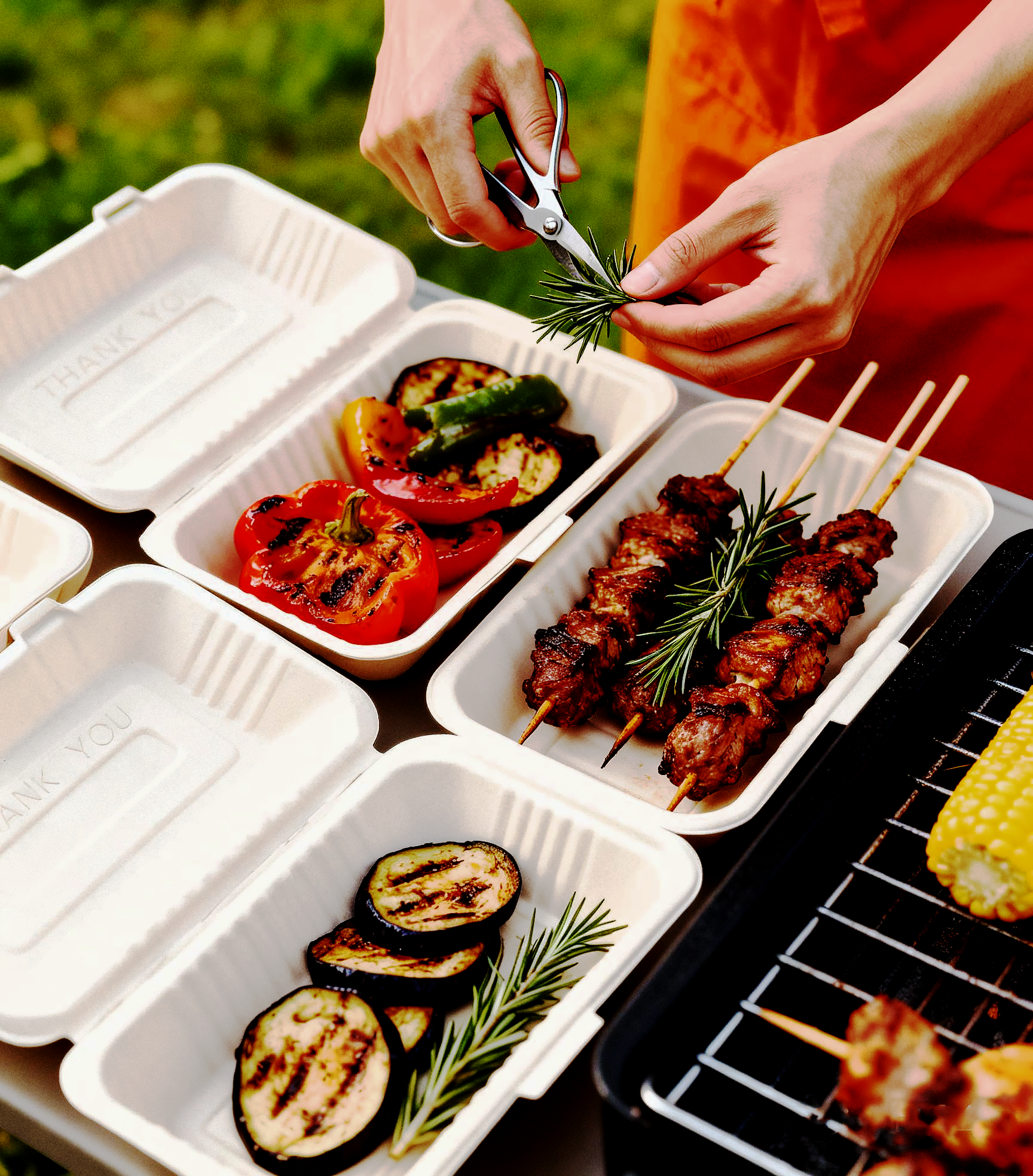
The Performance Deficit: Why Standard Eco-Friendly Bowls Turn Soggy and Leak
The core failure stems from a fundamental conflict between natural fiber properties and commercial food service demands. Plant-based materials such as sugarcane bagasse and bamboo are inherently hydrophilic and oleophilic. Constructed from pure cellulose, these fibers act as a network of microscopic capillary channels that actively absorb moisture and grease.For decades, PFAS chemical treatments masked this inherent vulnerability. With those synthetic chemistries now banned, packaging performance is governed entirely by raw physical capillary action.When operators package steaming hot curry, oil-rich fried proteins, or high-temperature noodle soups in low-grade plant-fiber containers, grease does not merely rest on the surface. It penetrates aggressively into the micro gaps between fiber structures. This triggers two irreversible service failures:
Structural Collapse: Hot oil weakens the hydrogen bonds within cellulose fibers, eroding the container’s rigidity and structural stability during transit.
Grease Sweating Effect: Lipids migrate fully through the bowl wall and condense on the exterior surface, staining tables, customer clothing, and ruining the overall dining experience.
The Costly Trap of Pre-2026 PFAS-Free Alternatives
To quickly adapt to PFAS regulatory restrictions, most packaging manufacturers rushed underdeveloped solutions to market. This leaves restaurant operators trapped between three compromised options, each carrying critical operational or compliance flaws:
1. Plastic Regression (PLA/PE Lining)
Traditional plastic or bioplastic linings do block grease and moisture effectively. However, this layer eliminates home and industrial compostability entirely. It reclassifies a “sustainable” packaging product as persistent landfill waste, defeating the core purpose of eco-friendly switching.
2. The “Cold-Only” Performance Myth
Many budget PFAS-free containers are only functional for cold, dry, low-moisture menu items. When exposed to high-temperature cooking oil above 180°C, their weak surface barriers break down rapidly, leading to structural disintegration mid-delivery.
3. Unverified “Black Box” Coatings
Some suppliers claim grease resistance with proprietary unnamed coatings, but lack third-party international composting and safety certifications. This creates significant brand risk, exposing businesses to greenwashing allegations and regulatory non-compliance penalties.
The Solution: Engineered Material Science Over Chemical Shortcuts
Achieving commercial-grade hot grease resistance without sacrificing full compostability requires abandoning unreliable surface chemical sprays. The sustainable and effective alternative lies in optimized fiber structure engineering and next-generation bio-barrier technology.The following benchmark highlights the clear performance gap between conventional inferior alternatives and advanced structural bio-coating solutions:
| Performance Metric | Inferior Conventional PFAS-Free Options | Advanced Mechanical & Bio-Dispersion Solution |
| Fiber Density | Low fiber refining; loose fiber matrix with open capillary channels, prone to rapid leakage and oil penetration. | High-intensity mechanical refining; tightly interwoven bamboo and sugarcane fiber structure that physically blocks capillary penetration. |
| Barrier Technology | No effective barrier, or non-compostable plastic lining that ruins sustainability credentials. | Food-grade water-based bio-dispersion micro-coating, fully compatible with industrial and home composting standards. |
| Thermal & Oil Stability | Structural deformation and leakage starting at 60°C; fails rapidly under high-heat oily conditions. | Maintains complete structural integrity at 100°C+ with sustained hot oil exposure for full delivery cycles. |
The future of compliant, high-performance sustainable packaging relies on dual optimization of fiber structure and barrier coating systems.By deep mechanical refining of long-strand bamboo fiber and blending with flexible sugarcane bagasse, the base material achieves extreme natural density. This physically closes most micro-capillary pathways before any coating is applied. The secondary food-safe water-based bio-dispersion layer forms a heat-activated cross-linking barrier. This structure actively repels high-temperature grease and fatty acids during service, while fully breaking down under standard composting conditions.The Bottom Line: Packaging Performance Defines Brand Reputation
In modern food service operations, packaging acts as the frontline guarantee for customer experience. A single leaking, soggy, or failed container does not only waste packaging inventory — it results in negative reviews, lost repeat customers, and long-term brand reputation damage.The evaluation standard for sustainable packaging has evolved. The industry no longer only asks:Is this container compostable?The critical operational question today is: Can this PFAS-free, fully compostable container survive a 45-minute hot oil delivery without structural failure or leakage?Compromising on performance to meet low-cost or basic compliance standards is a brand risk no food service business can afford.
|
Need a private label service for Your Zero Waste Business? Our professional eco-team offers consulting services to help you develop a comprehensive RENEWABLE packaging solution, including private label production for your business. Contact us to align your business with sustainable practices and achieve your zero-waste goals together. |
RELATED POST
GO PLASTIC-FREE WITH ECO PACK: WAYS TO STEP INTO A ZERO-PLASTIC LIVING
Molded Fiber Tableware: Why This Plastic Alternative Actually Works—MVI ECOPACK
Why Sustainable Bagasse Packaging Is the Future of the Food Delivery Industry?


