


WHY BAGASSE PIZZA PLATES ARE THE NEW POPULAR FOR PARTY&HOME USE
Publisher: MVI ECO
2026/2/6
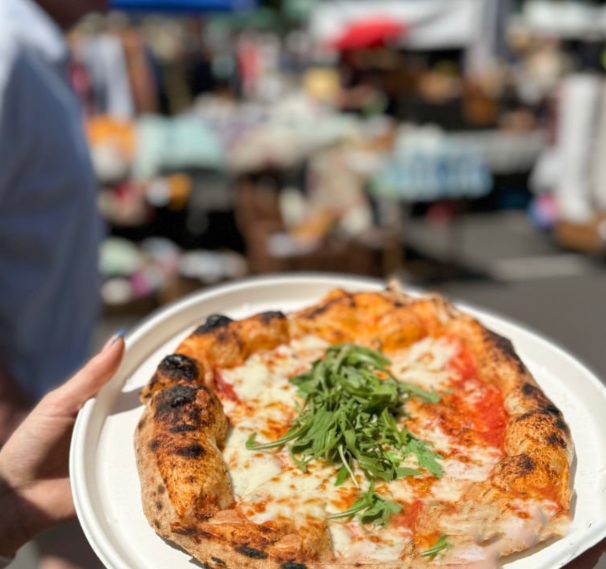
Picture this: You’ve ordered bagasse plates thinking they’re “oven-safe” based on the label, you load up pizza slices for reheating, slide them into a 400°F oven, and fifteen minutes later you discover warped, weakened plates that barely held together.This confusion happens more than you’d think, and it stems from misleading labeling and genuine confusion about what “heat-resistant” actually means for compostable plates. Let’s clear up the confusion with facts, temperature limits, and practical guidance for when bagasse plates work brilliantly—and when they don’t.
What Makes Bagasse Different?
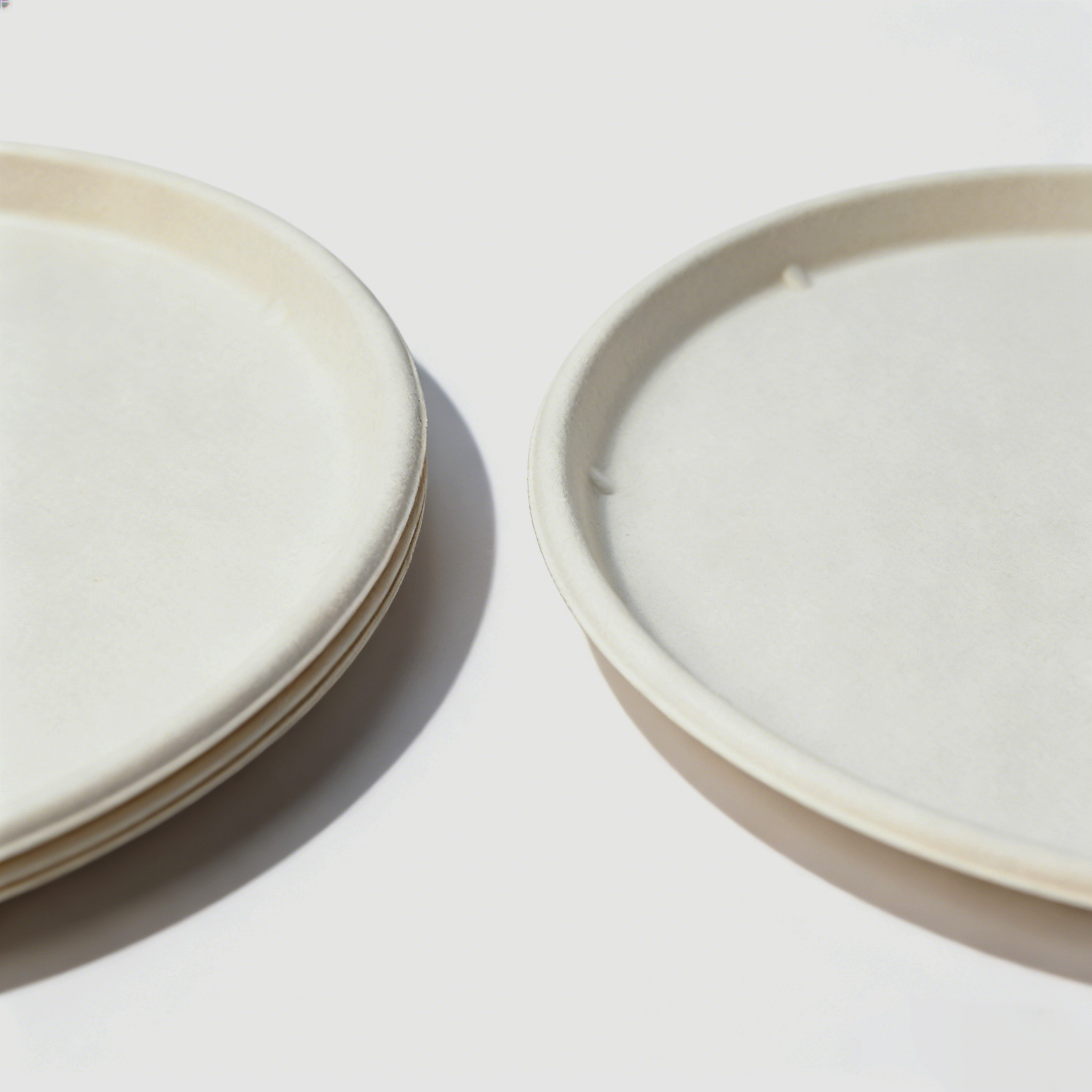
Bagasse is the fibrous material left over after sugarcane stalks are crushed to extract juice. For decades, this agricultural byproduct was either burned (creating air pollution) or simply discarded. Today, it’s being transformed into some of the strongest compostable plates available.
It’s an upcycled product—made from the leftover fiber of the sugar industry—that actually performs better than the plastic it replaces. It’s eco-friendly compostable plates reimagined for people who actually care about how their food tastes.
The Strength Of Bagasse Pizza Tray
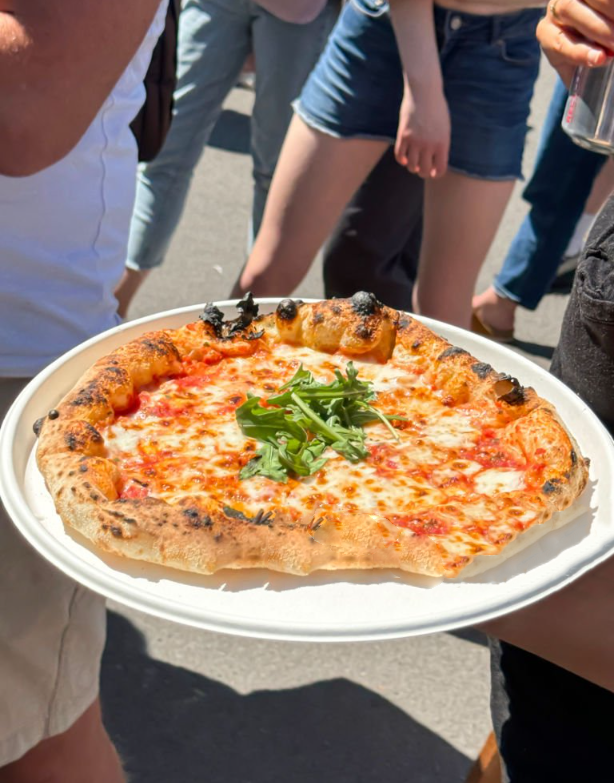
Many people ask, “Why did my pizza plate crack in the air fryer oven?” The answer is usually Thermal Shock. Ceramic or glass plates can’t handle the rapid temperature spikes of modern air fryers. Bagasse pizza plates are designed for serving and reheating, not for baking raw dough at 450°F. However, they are the king of the air fryer for reheating. Unlike ceramic, bagasse won’t crack; and unlike plastic, it won’t melt or leach toxins.
Think about regular paper plates for a moment. They’re made from long, smooth wood pulp fibers. When these fibers get wet or oily, they slip past each other like pickup sticks, causing the plate to collapse.Bagasse works completely differently. The fibers are short, rough, and naturally interlock—imagine LEGO bricks versus smooth sticks. When these fibers are molded under heat and pressure, they create a rigid mesh structure that can actually handle heavy, greasy foods without falling apart.
The “Compostable” Label Problem
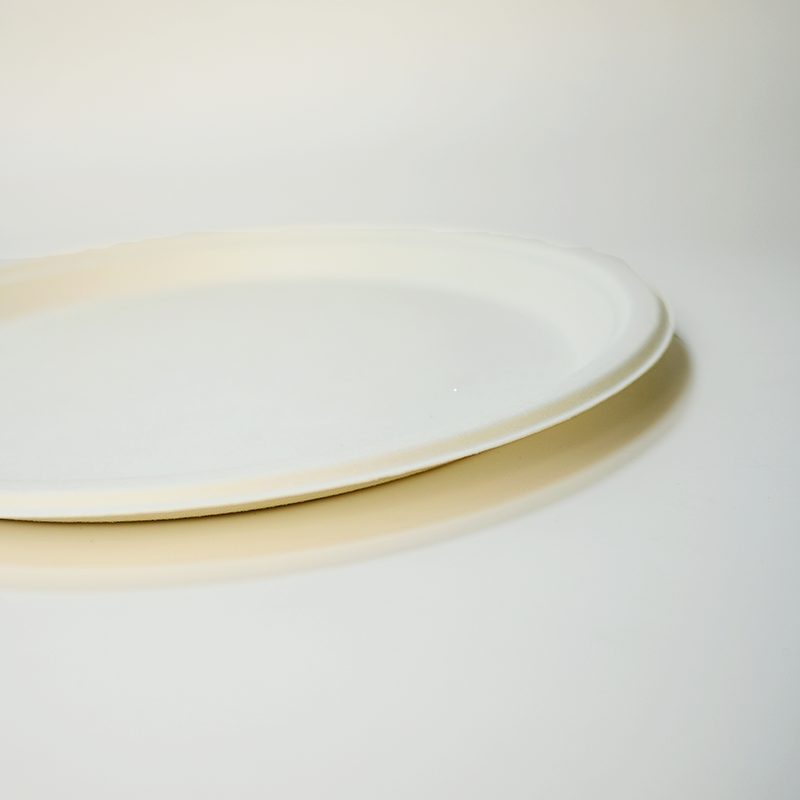
Not all “eco-friendly” plates are created equal. This is where things get tricky, and it’s worth paying attention.Many cheaper compostable products have contained PFAS chemicals for grease resistance, leading EU buyers to now specifically demand PFAS-free bagasse tableware. PFAS (per- and polyfluoroalkyl substances) are often called “forever chemicals” because they don’t break down in the environment and can accumulate in our bodies.
Some plates are also lined with thin plastic films (like polyethylene) to make them waterproof. These might technically be labeled “compostable,” but they won’t actually break down in your backyard compost bin or even in many commercial facilities.
How the Real Performance When Use Bagasse Pizza Plate
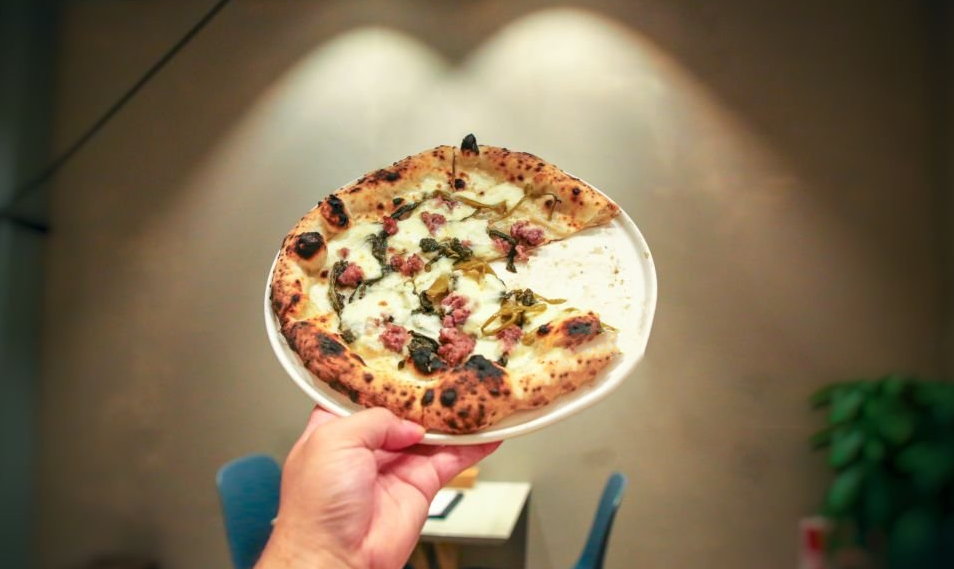
We don’t just sell eco-friendly compostable paper plates because they’re “green.” We sell them because they solve the logistics of a party.
1)Heat Resistant: Safe for hot foods up to 212°F (100°C). You can microwave leftovers directly on the plate without worrying about warping or strange chemical smells.
2)Oil and Grease Proof: The real test isn’t water—it’s greasy pizza, BBQ ribs with sauce, or fried chicken. Quality bagasse plate holds up even when food sits for a while.
3)Cut Resistant: You shouldn’t have to worry about your knife going through both your steak and your plate. The dense fiber provides genuine resistance while remaining biodegradable.
4)Load Capacity: A well-made 12-inch bagasse plate can support over 3 pounds of food without bending significantly. That’s multiple pizza slices or a full BBQ meal.
The Sustainable Value Of Bagasse Plate
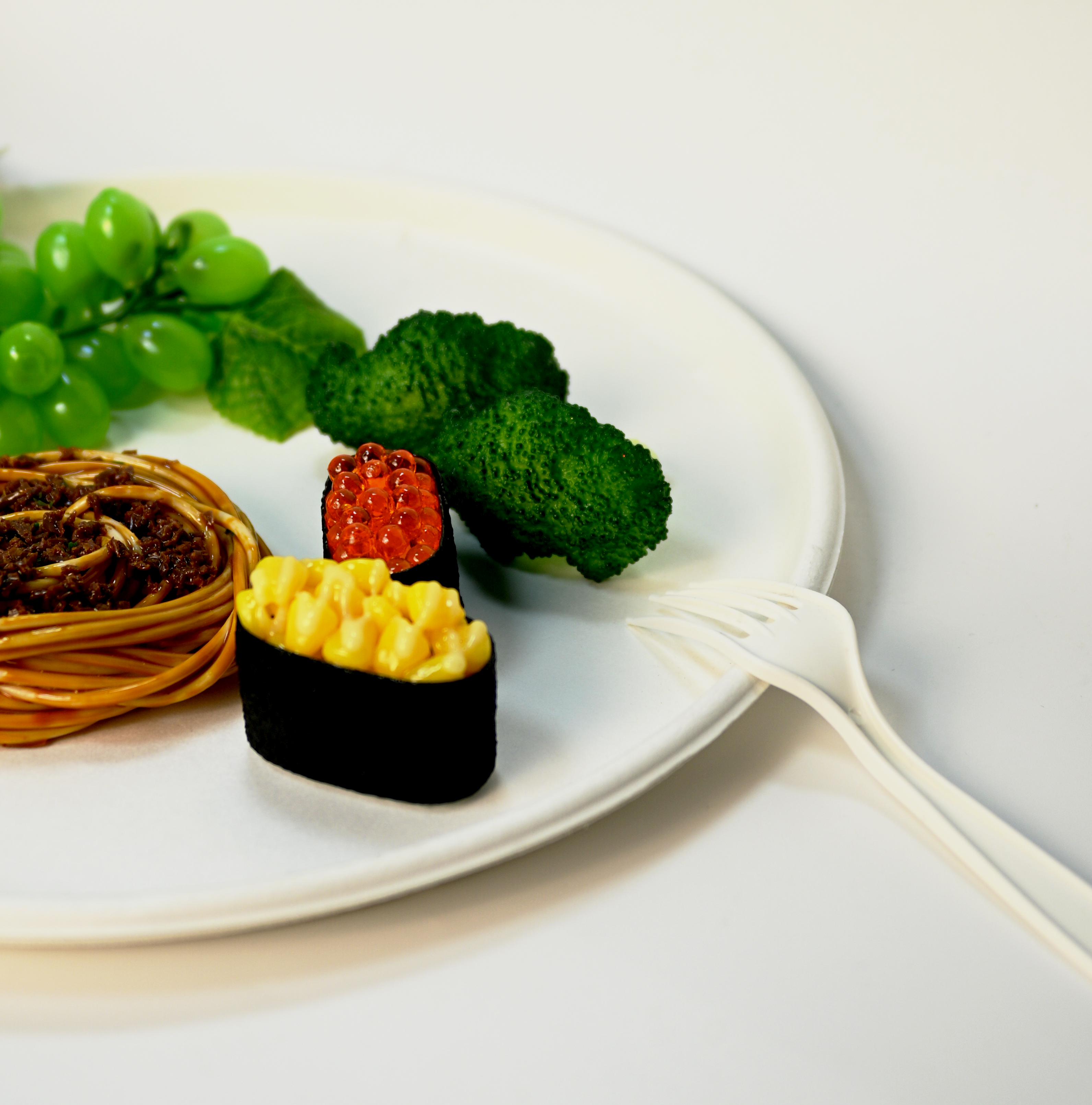
The compostable tableware market is growing from $11.55 billion in 2025 to a projected $18.18 billion by 2035, with bagasse dominating the market due to its ready availability and eco-friendly nature. This isn’t just a trend—it’s a fundamental shift in how we think about disposable products.
When you use bagasse plates:
1)They break down in 60-90 days in commercial composting facilities
2)They return nutrients to the soil instead of sitting in landfills for centuries
3)Production creates 70% less greenhouse gas emissions than plastic manufacturing
4)You’re giving agricultural waste a second life instead of letting it burn
The Trustworthy Upgrade You Should Have
Bagasse pizza plates represent a simple upgrade that makes sense on multiple levels. They work better for pizza and heavy foods. They’re genuinely compostable without hidden plastics or toxic chemicals. And they turn agricultural waste into a resource instead of pollution.Ready to upgrade your catering game? Let’s talk about how MVI Bagasse solutions can eliminate your “CRACK IN STOVE ” complaints.
Quick Reference Guide
Q:What is bagasse?
A:Sugarcane fiber left after juice extraction—an agricultural byproduct turned into compostable plates
Q:How long to decompose?
A:60-90 days in commercial composting facilities; slower in landfills but still biodegradable
Q:Safe for hot food?
A:Yes, up to 212°F (100°C); microwave safe
Q: “Why did my bagasse plate crack in my air fryer?”
A: Air fryers typically operate at 375-450°F with intense direct heat and airflow. Most bagasse plates aren’t rated for these conditions. The combination of high temperature and direct heat exposure causes rapid fiber degradation, leading to cracking, warping, or charring.
Q: “Can I use bagasse plates for pizza in a regular oven?”
A: It depends on temperature and duration. For gentle warming at 250-300°F for 10-15 minutes, high-quality bagasse plates may work. For standard pizza reheating at 400°F+, use oven-safe alternatives like ceramic plates or aluminum pans instead.
Q: “Are all bagasse plates the same heat resistance?”
A: No. Temperature tolerance varies significantly by:
1)Manufacturing quality
2)Plate thickness
3)Fiber density
4)Presence of coatings
Always check specific product specifications.
Q: “What’s the safest temperature for bagasse plates?”
A: For universal safety across all bagasse products: 212°F (100°C) or below. This covers microwave use and warm (not hot) food service without risk.
|
Want to Achieve Zero Waste for Your Food Service Business? Our professional eco-team offers consulting services to help you develop a comprehensive compostable packaging solution, including home compostable tableware options. Contact us to align your business with sustainable practices and achieve your zero-waste goals together. |

-The End-
Related Articles:
CAN YOU REALLY HAVE A HAND-FREE, ZERO-WASTE KITCHEN?THE TRUTH ABOUT TRULY COMPOSTABLE PLATE
Sturdy & Truly Compostable? Your Guide to Choosing Bagasse Straws & Dodging Greenwashing
Why Sustainable Bagasse Packaging Is the Future of Food Delivery Industry?
IS BAGASSE TABLEWARE SAFE FOR KIDS? EVERY PARENTS SHOULD KNOW THESE.
SUGARCANE BAGASSE PLATES vs PAPER PLATES : WHAT’S THE REAL DIFFERENCE?
TOP5 Popular Biodegradable Tableware Materials: 2025 Market Insights & Business Guide

Web: www.mviecopack.com
Email:orders@mvi-ecopack.com
Telephone: 0771-3182966


