TOP 5 POPULAR BIODEGRADABLE TABLEWARE MATERIALS |
2026 MARKET INSIGHTS & BUSINESS GUIDE
Publisher: MVI ECO
2026/2/5
Table of Contents |
|
1.Market Context & Segmentation 2.TOP1 Sugarcane Bagasse: The All-Round Market Leader 3.TOP2 Bamboo Fiber: The Premium Aesthetic Choice 4.TOP3 Palm Leaf: The Artisanal Eco-Conscious Option 5.TOP4 PLA (Polylactic Acid): The Transparent Solution for Cold Applications 6.TOP5 Wheat Straw & Agricultural Byproducts: The Innovative Frontier 7.How to Choose the Right Biodegradable Tableware 8.Frequently Asked Questions |
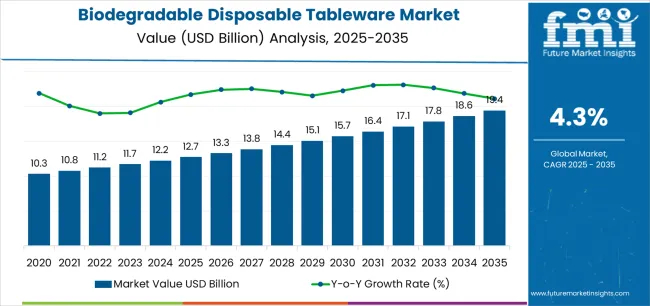
The global biodegradable disposable tableware market is experiencing steady growth, transitioning from a niche eco-friendly option to an increasingly mainstream choice, driven by environmental concerns and regulatory policies. According to Future Market Insights (FMI), the market is estimated to be valued at USD 12.7 billion in 2025 and is forecast to reach USD 19.4 billion by 2035, representing a compound annual growth rate (CAGR) of 4.3% over the decade. This growth is part of the broader shift towards sustainable packaging solutions.This expansion is fueled by key drivers such as widespread single-use plastic restrictions, the growing food delivery sector, and increasing consumer preference for sustainable products.
FMI-biodegradable-disposable-tableware-market-market-value-analysis
Market Context & Segmentation
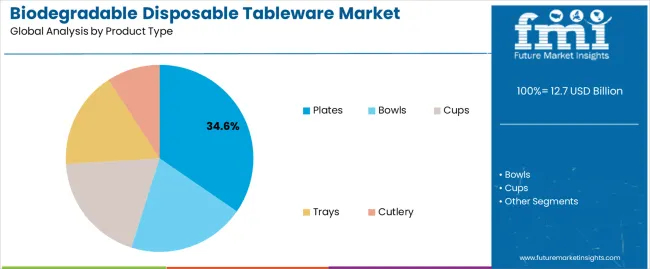
Overall Market Size & Growth: The global biodegradable disposable tableware market is projected to grow from USD 12.7 billion (2025) to USD 19.4 billion (2035) at a 4.3% CAGR.Product Type Breakdown: Among product types, plates hold the largest segment share at 34.6% of the total market value in 2025.Material Breakdown (Broad Category): In terms of primary material categories, pulp and paper-based materials (which include bagasse, bamboo pulp, wheat straw, etc.) dominate the market, accounting for 66.7% of the value share. Bioplastics (including PLA) constitute the remaining significant portion.
FMI-biodegradable-disposable-tableware-market-analysis-by-product-type
| Segment | Size (2025) | Forecast (2035) | CAGR |
| Biodegradable plates | $15.3 billion | $35.6 billion | 8.5% |
| Biodegradable Meal Trays | $1.5 billion | $3.5 billion | 8.5% |
Key Segmental Market Size Comparison (2025-2035)
TOP1 Sugarcane Bagasse: The All-Round Market Leader
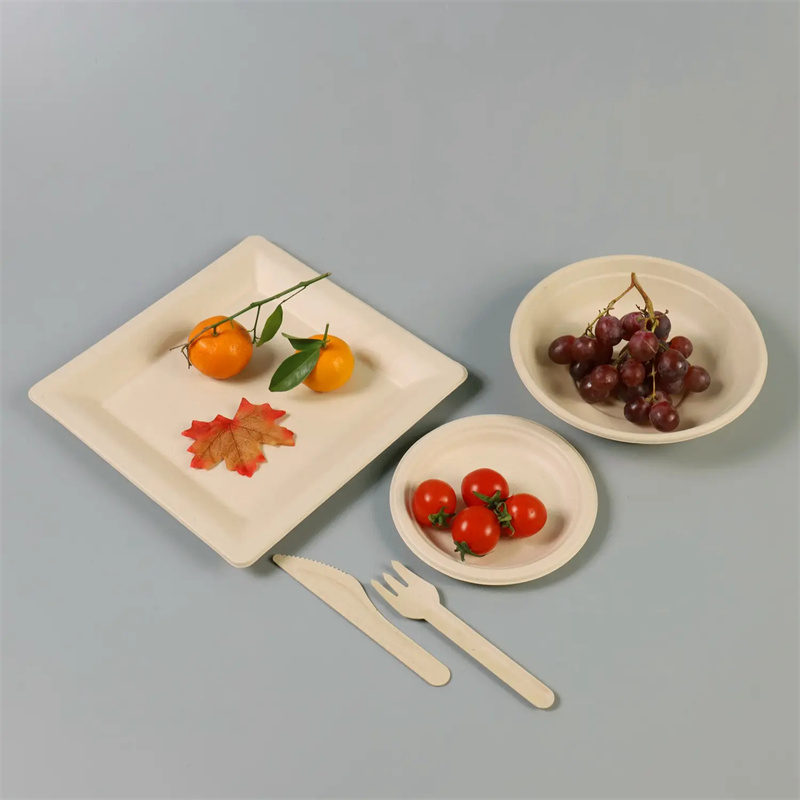
Sugarcane bagasse stands as the backbone of the biodegradable tableware industry, holding a 47.6% global market share and growing at 8.2% annually. Its dominance extends to the biodegradable meal trays segment, where it also commands 47.6% of the material share—testament to its versatility across product types. Derived from the fibrous residue left after sugarcane juice extraction (once discarded as waste), this material has become the preferred choice for its unbeatable balance of performance, cost, and sustainability.Key advantages include exceptional heat resistance (withstanding 200°F without warping) and natural grease resistance, thanks to its dense fiber matrix that requires no chemical coatings. Unlike paper plates that sag or leak under heavy, saucy foods, bagasse maintains structural integrity, eliminating the need for double-stacking and reducing long-term costs.
From a sustainability perspective, bagasse excels as a byproduct of sugar production, requiring no additional farming or resource extraction. It fully decomposes into nutrient-rich compost in 60-90 days in commercial facilities (130-160°F) and within three months in home compost bins—outperforming coated paper plates. The Sustainability Consortium (TSC) confirms that bagasse production reduces carbon emissions by 65% compared to traditional plastic tableware, aligning with global circular economy goals.
TOP2 Bamboo Fiber: The Premium Aesthetic Choice
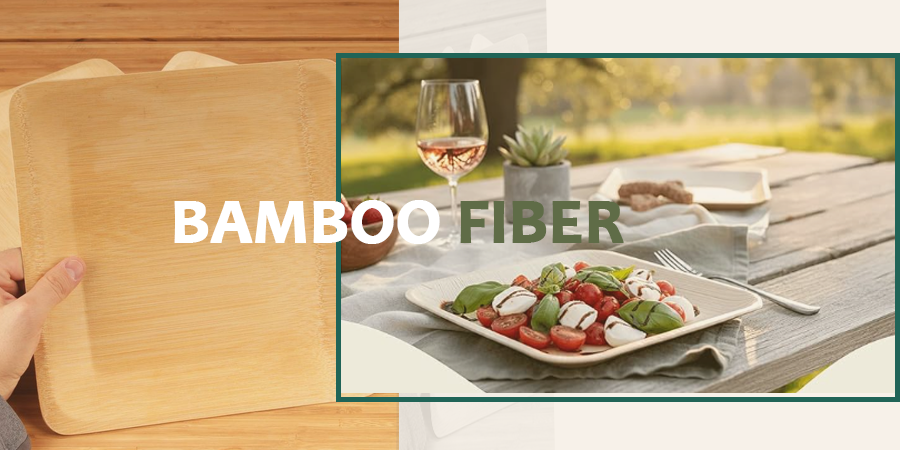
Bamboo fiber is the fastest-growing segment in the market, with an 8.2% annual growth rate, leading the premium category. It commands a 30-45% price premium over bagasse, competing on aesthetic appeal—offering a light, uniform color, smooth texture, and subtle grain that elevates dining presentations. This makes it a top pick for upscale restaurants, catering services, and luxury events, where premium texture directly influences customer perception.
Beyond aesthetics, bamboo boasts superior tensile strength, allowing food to be cut directly on the plate without damage. Its sustainability credentials are equally impressive: bamboo grows up to 3 feet per day, reaches harvest maturity in 3-5 years (vs. 20-70 years for paper-producing trees), and regenerates from its root system.However, most bamboo tableware is manufactured in Asia, leading to a higher shipping cost compared to locally processed bagasse.
TOP3 Palm Leaf: The Artisanal Eco-Conscious Option
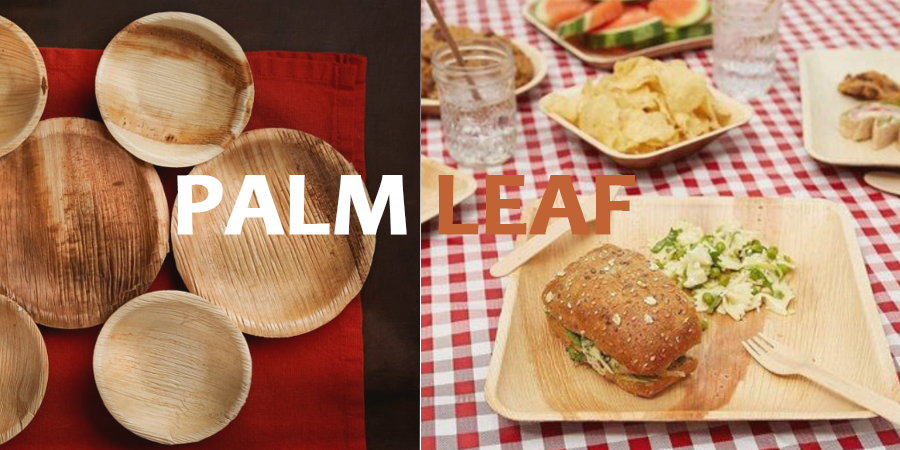
Palm leaf tableware occupies a niche but steadily growing market with a 6-7% annual growth rate, prized for its unique, one-of-a-kind appearance. Made from naturally fallen Areca palm leaves through minimal processing (collection, cleaning, and heat-pressing) with zero chemicals or additives, it features organic grain patterns that add rustic charm to outdoor weddings, eco-tourism venues, and artisanal food markets. This aligns with the rising demand for “authentic” sustainable products among consumers willing to pay a premium for story-driven packaging.
While excelling in atmosphere creation, palm leaf has limitations: heat tolerance up to 150°F (unsuitable for hot soups or heavily sauced dishes) and moderate liquid resistance. It decomposes rapidly—60 days in commercial compost and 90-120 days in home bins—and supports rural communities by converting forest waste into income.
TOP4 PLA (Polylactic Acid): The Transparent Solution for Cold Applications
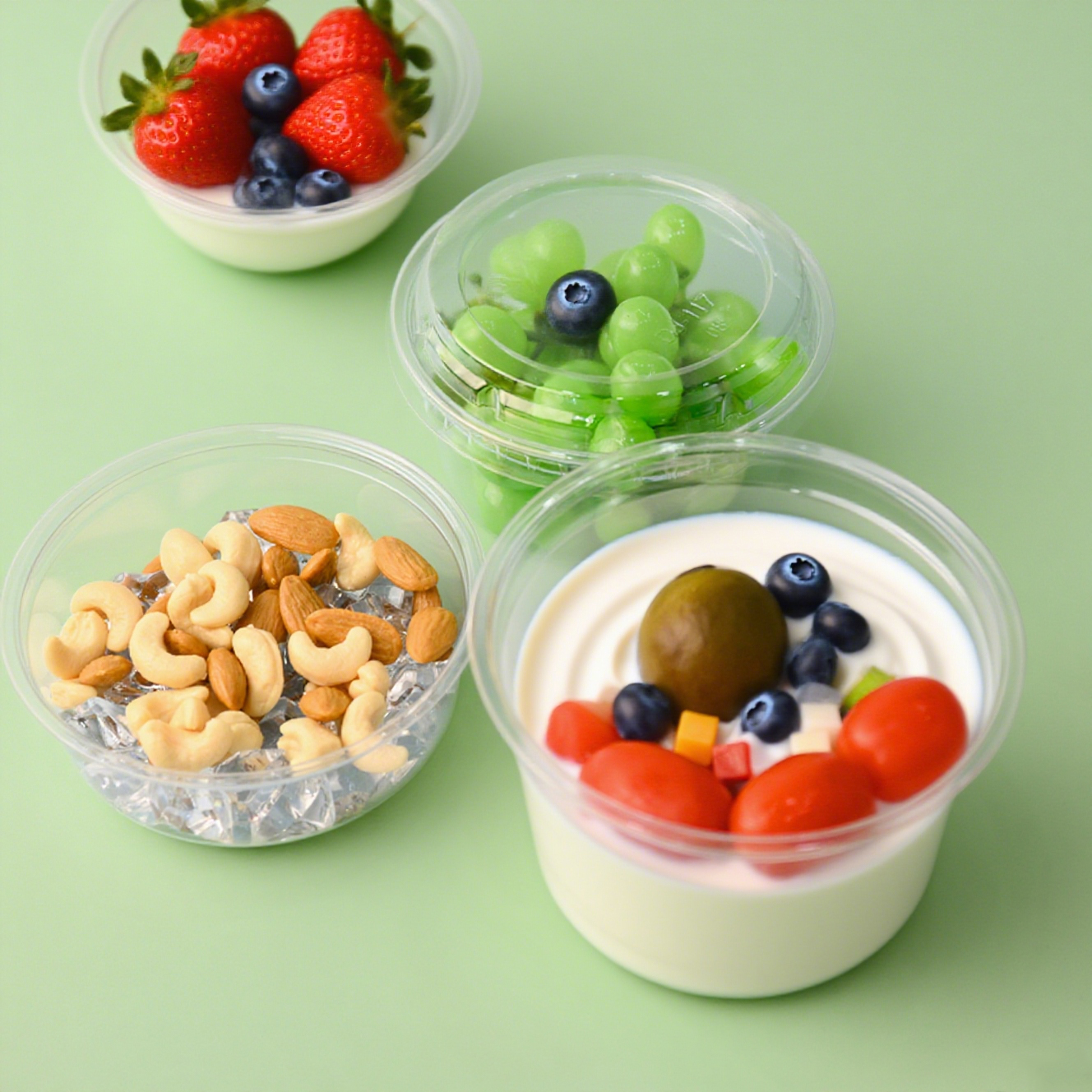
PLA holds a 15-18% market share, growing at 5-6% annually, and fills a unique niche with its transparency. Made from fermented plant starches (corn or sugarcane), it mimics conventional plastic’s clarity and moisture barrier—ideal for cold drinks, salad containers, and bakery packaging, where visibility drives sales. This is particularly valuable in the biodegradable wrap systems market, where plant-based films (including PLA) account for 34.7% of material share.
Critical limitations of PLA include poor heat resistance (softening at 110-115°F, making it unsafe for hot food/drinks) and reliance on commercial composting facilities (140°F+) for decomposition within 90-180 days. In home compost or landfills, it degrades slowly over years due to lack of heat and oxygen—per Biodegradable Products Institute (BPI) standards. It is best suited for cold applications in regions with advanced waste management systems, such as Western Europe and major North American cities.
TOP5 Wheat Straw & Agricultural Byproducts: The Innovative Frontier
This emerging category transforms agricultural waste—wheat straw, rice husks, coconut shells, and corn stalks—into functional tableware. By combining these byproducts with plant-based binders, manufacturers create lightweight, cost-competitive options (priced at or below bagasse) that outperform paper plates.With moderate heat resistance and durability, these products suit most everyday uses.
How to Choose the Right Biodegradable Tableware
- Food Type: Opt for bagasse or bamboo for hot, heavy, or saucy foods (200°F heat resistance), the top choices for prepared and ready-to-eat meals (44.1% market share in biodegradable meal trays). Choose PLA for cold items needing visibility (boosting retail sales by up to 18%). Palm leaf or wheat straw works for light foods like appetizers or sandwiches.
- Usage Volume: Bagasse is ideal for high-volume daily use (best cost-performance). Bamboo/palm leaf suits occasional special events, while wheat straw is more accessible for small-batch home use.
- Composting Access: Commercial composting supports any certified material; for home compost, choose bagasse, bamboo, or palm leaf. Even without composting, biodegradable options break down 3-5 times faster than plastic in landfills.
- Brand Priorities: Cost efficiency? Bagasse/wheat straw. Premium presentation? Bamboo/palm leaf. Environmental storytelling? Bagasse/agricultural byproducts. Transparency? PLA (cold only).
- Budget: Price-sensitive buyers: bagasse. Moderate budget: mix bagasse (daily) + bamboo (special occasions) (adopted by 68% of mid-scale restaurants). Premium budget: bamboo/palm leaf.
Frequently Asked Questions
Q:What’s the most popular biodegradable plate worldwide?
A:Sugarcane bagasse (47.6% market share) for its balanced performance, cost, and compatibility with global composting systems.
Q:Can bamboo replace bagasse?
A:Yes for premium aesthetics and small-scale use; bagasse remains superior for high-volume, cost-sensitive operations.
Q:Is PLA compostable?
A:Only in commercial facilities (140°F+); it decomposes slowly in home compost or landfills.
Q:How long do these materials take to decompose?
A:60-90 days (commercial compost) for most; 90-120 days (home compost) for bagasse/bamboo/palm leaf; 90-180 days (industrial compost) for PLA.
Q:Which regions lead adoption?
A:Asia-Pacific (35%, fastest growth), Europe (34%), North America (28%).
Q:What’s the fastest-growing segment in sustainable packaging?
A:Biodegradable wrap systems (9.1% CAGR), followed by biodegradable meal trays (8.5%) and tableware (8.3%).
|
Want to Achieve Zero Waste for Your Food Service Business? Our professional eco-team offers consulting services to help you develop a comprehensive compostable packaging solution, including home compostable tableware options. Contact us to align your business with sustainable practices and achieve your zero-waste goals together. |

-The End-
|
|
Related Articles:
CAN YOU REALLY HAVE A HAND-FREE, ZERO-WASTE KITCHEN?THE TRUTH ABOUT TRULY COMPOSTABLE PLATE
Sturdy & Truly Compostable? Your Guide to Choosing Bagasse Straws & Dodging Greenwashing
Why Sustainable Bagasse Packaging Is the Future of Food Delivery Industry?
IS BAGASSE TABLEWARE SAFE FOR KIDS? EVERY PARENTS SHOULD KNOW THESE.
SUGARCANE BAGASSE PLATES vs PAPER PLATES : WHAT’S THE REAL DIFFERENCE?

Web: www.mviecopack.com
Email:orders@mvi-ecopack.com
Telephone: 0771-3182966