



TAKEAWAY CONTAINER SAFETY GUIDE |
AVOID HIDEN RISKS AND CHOOSE SECURE PACKAGING
Publisher: MVI ECO
2026/1/23
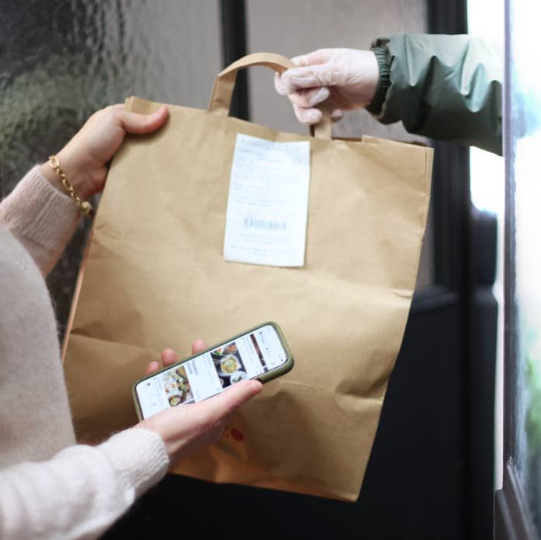
Takeaway food has become an indispensable convenience in modern life, yet the safety of the containers holding the food is often overlooked while enjoying the pleasure of delicious meals. Relevant testing data shows that more than one-third of takeaway containers may leach harmful substances such as plasticizers and microplastics when in contact with high-temperature, high-oil or acidic food, and long-term intake may pose potential impacts on human organs such as the cardiovascular system and liver. In fact, no professional chemical knowledge is required—mastering simple identification methods allows you to quickly screen out safe containers, ensuring peace of mind with every takeaway purchase. This article will clearly sort out the material characteristics, potential safety hazards and identification points of various types of containers, and attach a practical operation checklist to provide a rigorous reference for daily selection.
These Containers Have Definite Safety Hazards, Please Avoid Them Carefully
The following four types of containers, due to the inherent characteristics of their materials or inferior production processes, are prone to leaching harmful substances when in contact with hot food. They are high-risk categories in takeaway selection and need to be quickly identified and avoided through appearance, markings and other features.
Inferior Foam Containers (Polystyrene PS)
The core risk of such containers is that they release styrene monomers when in contact with food at or above 70°C or greasy ingredients. This substance is proven to have potential neurotoxicity, and long-term intake may damage the human nervous system. The identification features are very obvious: extremely light overall, mostly pure white, low physical strength, easy to break or crack with a light pinch, and often used to hold low-cost fried snacks, fast food staples, etc.
Non-food Grade Thin Plastic Bags
Such plastic bags are not designed for holding hot food, and their production raw materials do not meet food contact standards. When holding hot soup or fried food, plasticizers in the bag will accelerate leaching due to high temperature and mix into the food. Focus on checking the markings and texture when identifying: no any food grade certification marks (such as the universal “wine glass and fork” mark), thin bag thickness, poor ductility, and some products have a pungent plastic odor.
Transparent Rigid PC Plastic Containers (Recycling Mark No.7)
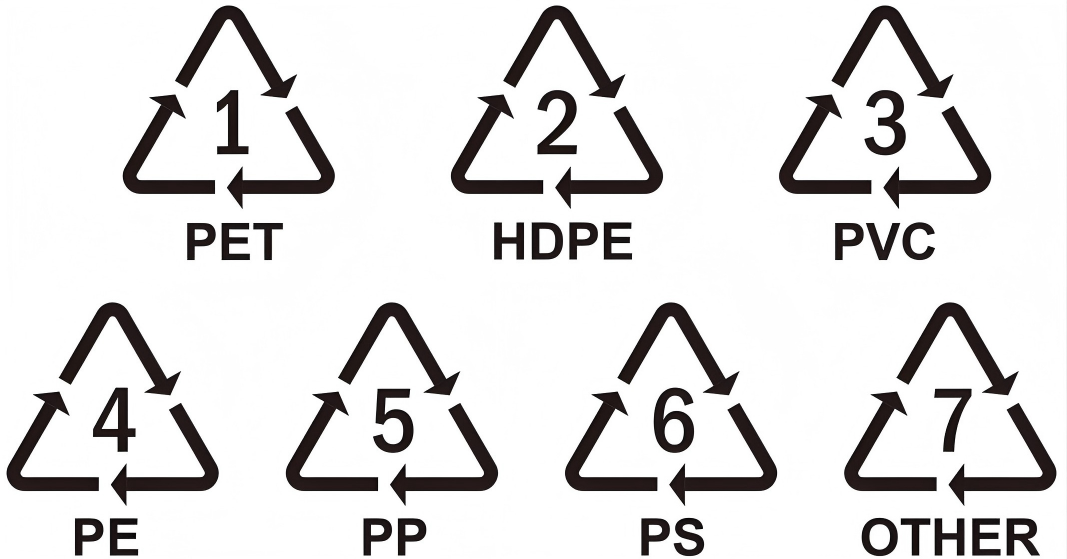
Although current regulations have clear limits on the leaching amount of bisphenol A (BPA) in such containers, their material characteristics determine that there are still potential risks. Long-term holding of food at or above 100°C or acidic food such as vinegar and tomato juice will increase the probability of harmful substance leaching. The identification points of such containers are: high transparency, hard texture, marked with the number “7″ or the letter “PC” in the triangular recycling mark at the bottom, and often used to hold pre-made cooked food, salads, etc.
Wax-coated or Plastic Laminated Paper Containers
The potential safety hazard of such containers is concentrated on the surface coating. If inferior paraffin wax or unqualified plastic laminating film is used, the coating components will migrate to the food after being heated, causing contamination; at the same time, the coating characteristics determine that such containers are absolutely not allowed to be heated in the microwave, which is easy to cause coating melting and carton deformation. When identifying, you can touch the inner wall of the container—if there is an obvious slippery or waxy feel, which is significantly different from the touch of ordinary paper containers, it can be determined as such a container.
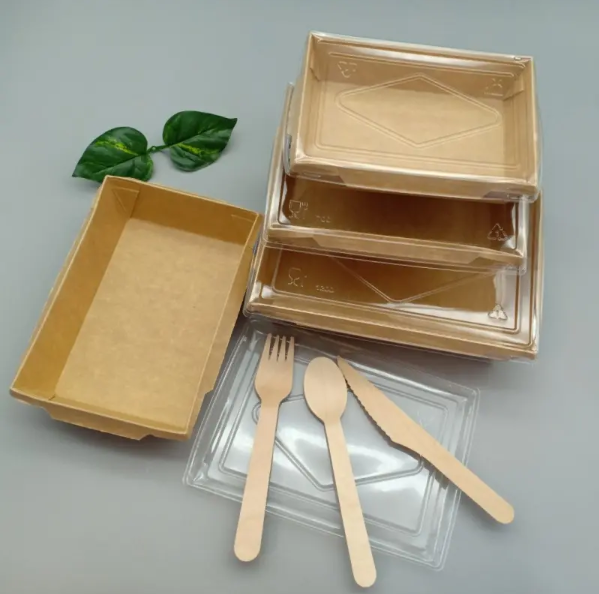
MVI Kraft paper food container
Prioritize Safe Container Categories, Material and Markings Are the Core Judgment Basis
Combined with the national standards for food contact materials and the current market application status, the following five types of containers have been fully verified for their safety and are reliable options in takeaway selection. Different categories have their own applicable scenarios and can be flexibly selected according to needs. The core identification principle is to check the material markings and relevant certifications.
Polypropylene Containers (PP, Recycling Mark No.5)
As the mainstream safe material in current takeaway containers, polypropylene containers can withstand a high temperature of 120°C, have excellent oil and acid resistance, meet the national standards for plastic materials for food contact, and products marked “microwavable” can be directly heated in the microwave. When identifying, just check the bottom of the container: the number “5″ or the letter “PP” is marked in the triangular recycling mark. The container is mostly white or translucent, with tough texture and not easy to break, which is the first choice for daily takeaways.
PFAS-free Industrially Compostable Containers
This is a new type of container category that balances environmental protection and safety, made from natural plant fibers such as sugarcane pulp and corn starch. Its core advantage is that it does not contain perfluorinated compounds (PFAS)—such substances are difficult to degrade and have potential risks to human health. Qualified products must have dual certification marks of “industrially compostable” and “PFAS-free” at the same time. The container itself has a natural fiber texture, and its physical strength can meet the needs of holding juicy and high-oil food. After use, it can be completely degraded in an industrial composting environment without environmental residue, suitable for parties, picnics and other scenarios.
Food Grade Stainless Steel Containers (304/316 Grade)
It belongs to the high-safety category of food contact containers, with stable chemical properties of the material, no leaching of any harmful substances, strong durability, and can be used repeatedly. When identifying, check the steel stamp on the container, which clearly marks the “304″ or “316″ food grade stainless steel grade, and has a food contact product certification mark at the same time. It is suitable for scenarios such as bringing your own lunch and long-term food storage, and is an ideal choice for takeaway reheating.
Glass Containers
The chemical properties of glass material are completely stable, and it will not react with any food or leach harmful substances. It is also high temperature resistant and easy to clean, making it the best choice for home heating and storing leftovers. Its only limitation is: heavy texture, poor impact resistance, easy to break, not suitable for the long-distance transportation scenario of takeaway distribution, and more suitable for home use.
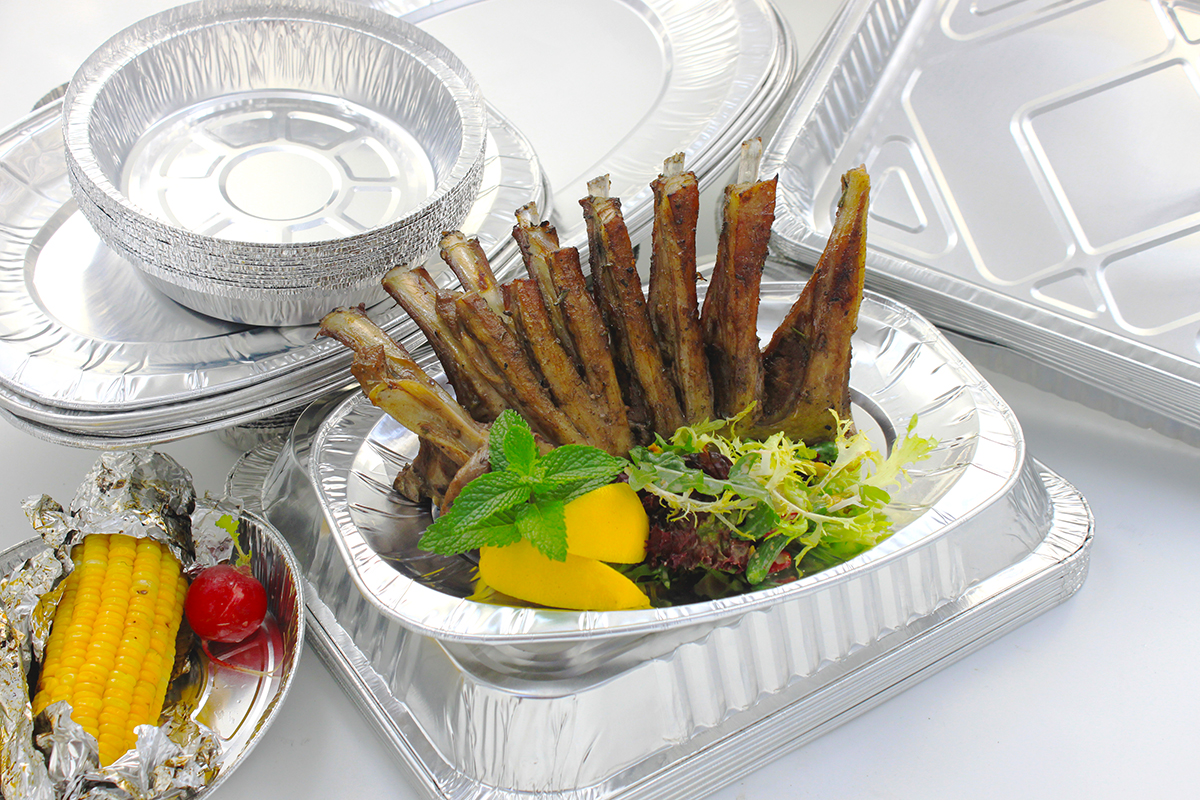
Aluminum Foil Containers (with PP No.5 Plastic Lids)
Aluminum foil material has excellent thermal conductivity and heat preservation performance, stable chemical properties, suitable for holding baked food and food that needs long-term heat preservation, and the container itself has no potential safety hazards. Two core points need to be noted when using: first, the supporting lid must be food-grade polypropylene (PP No.5) plastic to avoid leaching of harmful substances from non-food-grade lids when heated; second, aluminum foil containers are absolutely forbidden to be heated in the microwave, otherwise electric sparks will be generated, causing microwave oven failure or even fire. If reheating is needed, the food must be transferred to other microwavable containers.
Three-Step Safety Self-Check Checklist, High Practicability, Avoid Daily Selection Risks
In order to integrate the selection of safe containers into daily life without complicated operations, the following three-step self-check checklist has been verified by practice, with simple operation and short time consumption. It can effectively avoid most container safety risks and form a good habit of daily consumption.
5-Second Quick Check of Bottom Markings
After receiving the container, flip it over to check the bottom markings immediately, focusing on confirming two pieces of information: first, the number/letter in the triangular recycling mark, priority is given to PP material No.5; second, whether there is a food contact product certification mark. Even if the appearance of the container without any markings is normal, it should be used with caution, especially to avoid holding high-temperature and high-oil food.
Scientific Heating, Reject Blind Operation
Clarify the heating taboos of various containers: foam containers, non-food grade plastic bags, wax-coated/laminated paper containers and aluminum foil containers are all prohibited from microwave heating; only heat containers marked “microwavable” and made of PP No.5 material in the microwave. If there is any doubt about the safety of the container, do not take chances, and directly transfer the food to your own ceramic or glass bowl before heating.
≡
Quick Reference Table: Quick Check for Takeout Orders
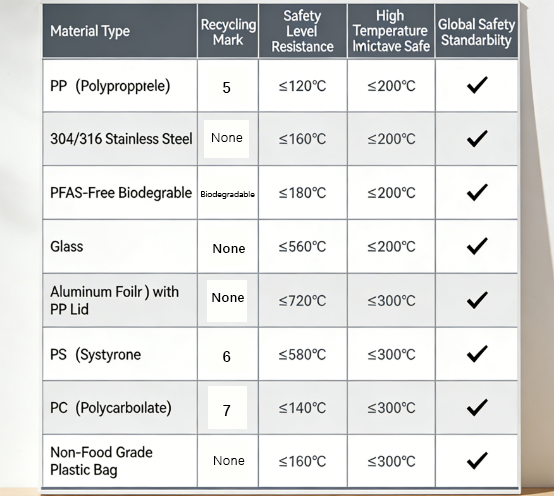
The convenience of takeaway should not come at the cost of food safety. As the last link of food contact, the safety of containers is directly related to physical health. Choosing a safe container does not require complicated professional knowledge, only simple identification methods and a normalized self-check habit. As consumers, every rational choice is not only responsible for their own health, but also a positive promotion of the safety standards of the food industry. Pay attention to container safety, start with every takeaway choice, and achieve both convenience and peace of mind.
|
Want to Achieve Zero Waste for Your Food Service Business? Our professional eco-team offers consulting services to help you develop a comprehensive compostable packaging solution, including home compostable tableware options. Contact us to align your business with sustainable practices and achieve your zero-waste goals together. |

-The End-
|
|
Related Articles:
CAN YOU REALLY HAVE A HAND-FREE, ZERO-WASTE KITCHEN?THE TRUTH ABOUT TRULY COMPOSTABLE PLATE
Sturdy & Truly Compostable? Your Guide to Choosing Bagasse Straws & Dodging Greenwashing
Why Sustainable Bagasse Packaging Is the Future of Food Delivery Industry?

Web: www.mviecopack.com
Email:orders@mvi-ecopack.com
Telephone: 0771-3182966
Post time: Jan-23-2026


