As global plastic bans and sustainability regulations keep tightening across the foodservice industry, more business owners are seeking reliable eco-friendly straw replacements. Among all green alternatives, sugarcane straws have quickly stood out and taken over the mainstream market in 2026.
TABLE OF CONTEN
Inherent Flaws Limit Further Popularization of Paper Straws
Premium Raw Materials Lay Foundation for Genuine Environmental Protection
Excellent Functional Performance Fits Varied Catering Usage Scenarios
Global Policies and Public Awareness Drive Market Popularity Surge
Diversified Specifications and Mature Supply Chains Meet Bulk Purchasing Needs
Reasonable Cost Planning Brings Long-term Stable Commercial Value
Introduction:The Gradual Decline of Traditional Paper Straws
Paper straws once served as the go-to eco-friendly replacement for single-use plastic straws, widely adopted by cafes, casual diners, beverage chains and catering operators across the globe. Yet as global environmental regulations grow tighter, and customers start to prioritize actual usability over vague green labels, classic paper straws have revealed plenty of practical flaws, losing much of their market favor in 2026.
Many conventional paper straws come with hidden plastic inner coatings, which stop them from fully breaking down naturally and easily spark public concerns over greenwashing. These items also struggle to meet the latest standards laid out by EU PPWR regulations, creating unnecessary hurdles for brands looking to expand into European and other regulated overseas markets.
It is against this backdrop that sugarcane bagasse straws have risen rapidly and cemented their place as a leading sustainable solution. In this article, we combine up-to-date market shifts, updated eco policies and real-world catering usage needs, to break down the core advantages of sugarcane compostable straws, compare them side by side with paper alternatives, and explain why this eco-friendly option has become such a popular pick within the modern foodservice space. We will also gently share how well-crafted sugarcane straw solutions fit seamlessly into mainstream bulk procurement and daily business operations.
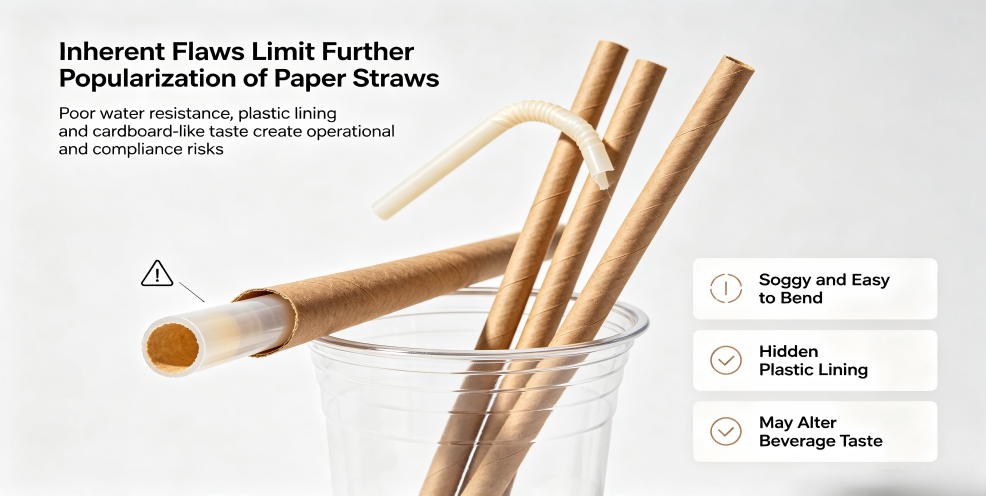
Inherent Flaws Limit Further Popularization of Paper Straws
When put into everyday catering service, the natural weaknesses of standard paper straws have slowly become noticeable obstacles to smooth business running and long-term sustainable branding.
The most obvious downside lies in poor water resistance and weak structural sturdiness. Once submerged in iced drinks, hot coffee, sparkling beverages or thick creamy shakes, regular paper straws quickly turn soggy, bend out of shape or even split apart. This not only forces venues to keep restocking spare straws and raises daily running costs, but also leaves diners with an unpleasant drinking experience.
To fix the waterproof issue, most mass-produced paper straws rely on polyethylene lining. This hidden plastic component rules out full natural decomposition, meaning such straws cannot pass official home or industrial compost certification. In regions with strict plastic bans and waste management rules, these non-compliant products face market entry restrictions and potential fines, making them far too risky for long-term bulk sourcing.
On top of functional issues, paper straws often carry a faint cardboard-like taste that alters the original flavour of beverages. For boutique cafes and premium food service brands focused on refined customer experiences, such small drawbacks can gradually wear down customer satisfaction and brand reputation over time.
Premium Raw Materials Lay Foundation for Genuine Environmental Protection
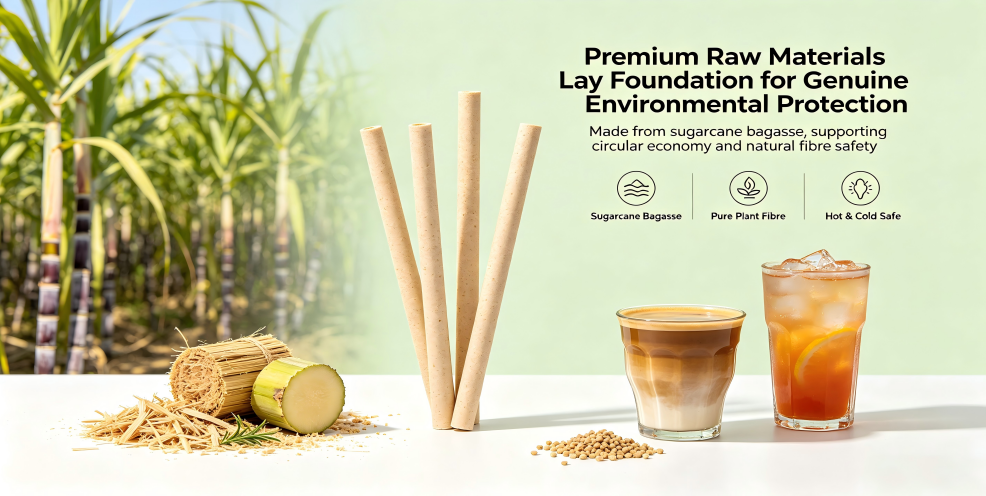
Unlike paper straws made from virgin wood pulp, quality sugarcane compostable straws are crafted from sugarcane bagasse — the fibrous by-product left after sugarcane processing. This waste-derived material aligns perfectly with the global push for circular economy and low-carbon development.
Making full use of sugarcane residues helps reduce unnecessary deforestation, while also finding valuable purposes for agricultural waste that would otherwise be burned or discarded. Brands switching to this material can easily enrich their ESG stories and deliver authentic sustainability messages to consumers and business partners alike.
In terms of safety, well-made sugarcane drinking straws use only pure natural plant fibre, with no harsh chemical binders or artificial additives added. After strict food-grade testing, they work safely with all kinds of hot and cold beverages, from fresh juices to craft cocktails. Our range of sugarcane bagasse straws strictly follows this pure fibre formula, ensuring zero odd flavours leach into drinks and keeping every sip tasting exactly as intended.
Excellent Functional Performance Fits Varied Catering Usage Scenarios
Disposable drinking straws used in catering businesses need to balance temperature resistance, durability and universal adaptability, and top-tier sugarcane straws perform steadily well across all these practical aspects.
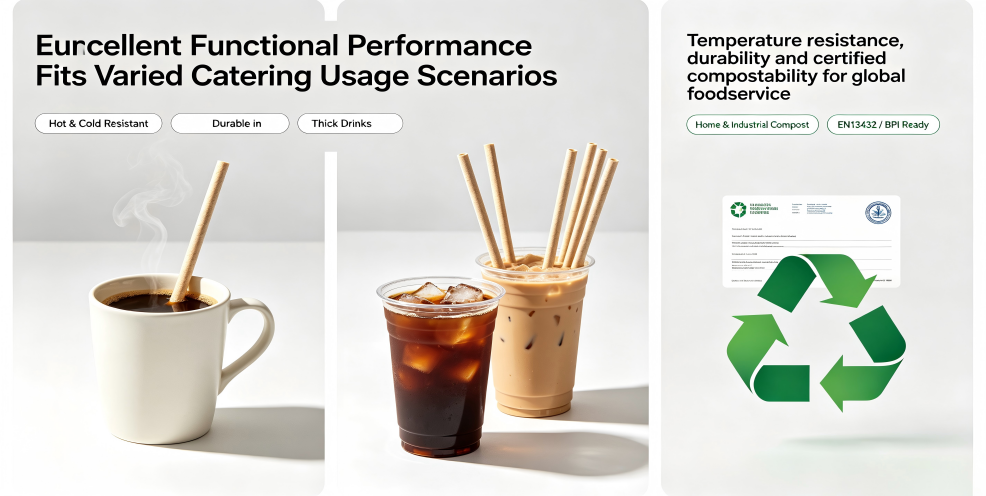
Quality home compostable straws made from sugarcane fibre feature a broad temperature tolerance range. They stay firm and intact for hours in both steaming hot drinks and icy cold beverages, without turning soft or warping easily. Even when used with thick drinks like milk tea and smoothies, their smooth tube structure allows easy flow and rarely gets clogged.
In terms of eco credentials that global buyers value highly, qualified sugarcane eco straws hold widely recognised certifications including EN13432 and BPI. They can decompose fully naturally in both household compost piles and professional industrial compost facilities, leaving no harmful residues behind.
All our sugarcane straw lines are fully certified in line with these international standards, so distributors and foodservice operators can confidently use them to pass local environmental inspections across Europe, North America and other key markets, and stay far away from greenwashing-related disputes.
Global Policies and Public Awareness Drive Market Popularity Surge
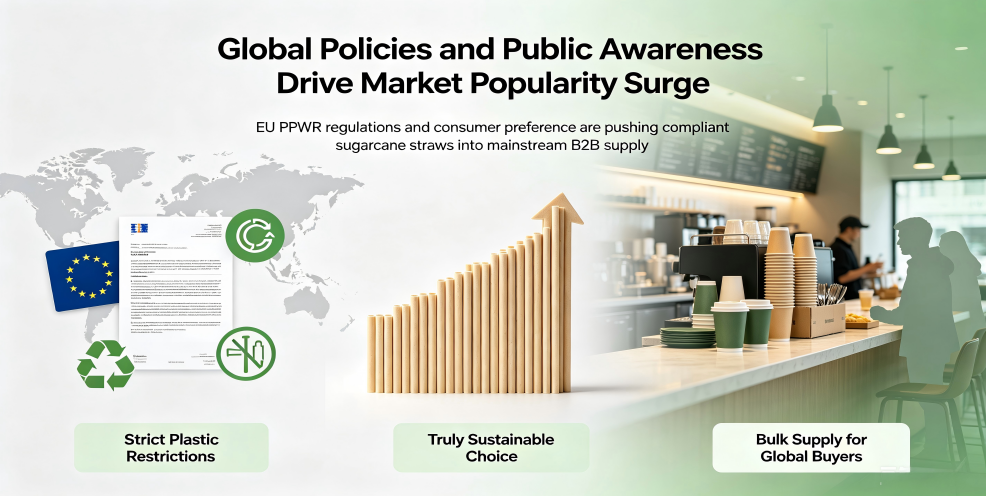
The year 2026 has seen two major forces reshaping the eco tableware market: increasingly strict cross-border plastic restriction policies, and growing consumer preference for genuinely sustainable products. Together, they have greatly lifted market demand for standard eco-friendly disposables, with PPWR compliant straws made from sugarcane fibre standing out with the strongest growth momentum.
Since the official rollout of EU PPWR rules, the whole supply chain for single-use packaging items has become more standardised and regulated. Regulatory bodies are now carrying out stricter checks on non-degradable goods, pushing many overseas importers, catering chains and wholesale distributors to phase out unreliable coated paper straws and unstable PLA options. More and more buyers are now leaning towards steady, fully compliant sustainable straws for fixed long-term orders.
Modern consumers are also far more mindful of eco-friendly choices when dining out. Businesses that adopt genuine plastic-free tableware tend to win more favour from environmentally conscious customers, and build a warmer, more responsible brand image in the competitive catering industry. As market demand keeps rising, reliable sugarcane straws have firmly secured their place as mainstream bulk-supply items in global B2B markets.
Diversified Specifications and Mature Supply Chains Meet Bulk Purchasing Needs
As market demand continues to grow, the sugarcane eco straw category has developed a complete and flexible product system, capable of meeting diverse purchasing demands from different types of businesses.
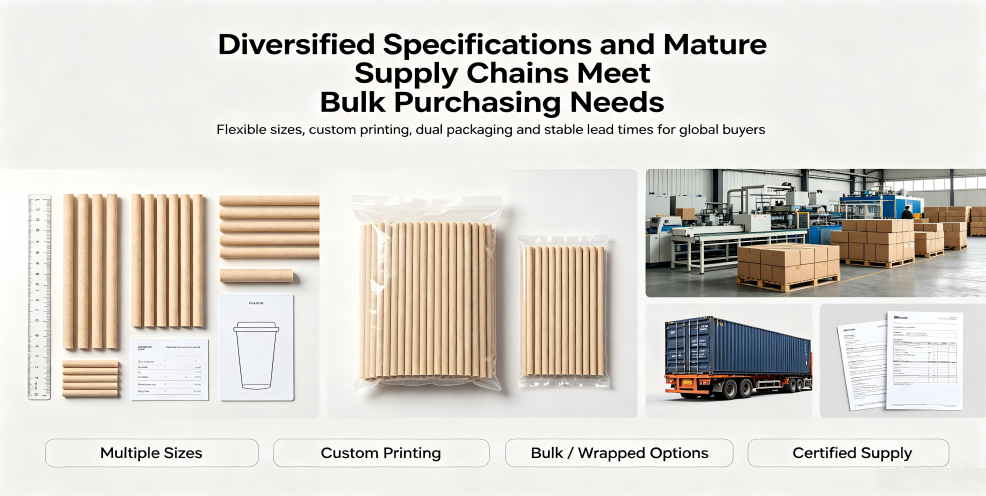
The industry now covers a full selection of standard diameters and lengths, matching beverage cups used for in-store dining, takeaway services and large-scale event catering. Besides regular sizes, branded customisation has also become a popular trend. Custom printed sugarcane straws with brand logos or eco slogans are well-loved by chain businesses, enabling subtle yet effective brand exposure during daily service.
When it comes to packaging choices, buyers can pick between loose bulk packs for back-of-house use or individually wrapped straws ideal for takeaway and outdoor catering. Supported by streamlined production lines, established suppliers are able to maintain consistent product quality across every batch, and fulfil large-volume orders efficiently with stable lead times.
We have optimised our production and packaging system to cater to such varied needs, offering flexible size selection, simple custom printing service and dual packaging solutions. Meanwhile, we can arrange a full set of certification documents, safety test reports and compliance statements alongside shipments, which greatly simplifies customs clearance and market registration work for cross-border business partners.
Reasonable Cost Planning Brings Long-term Stable Commercial Value
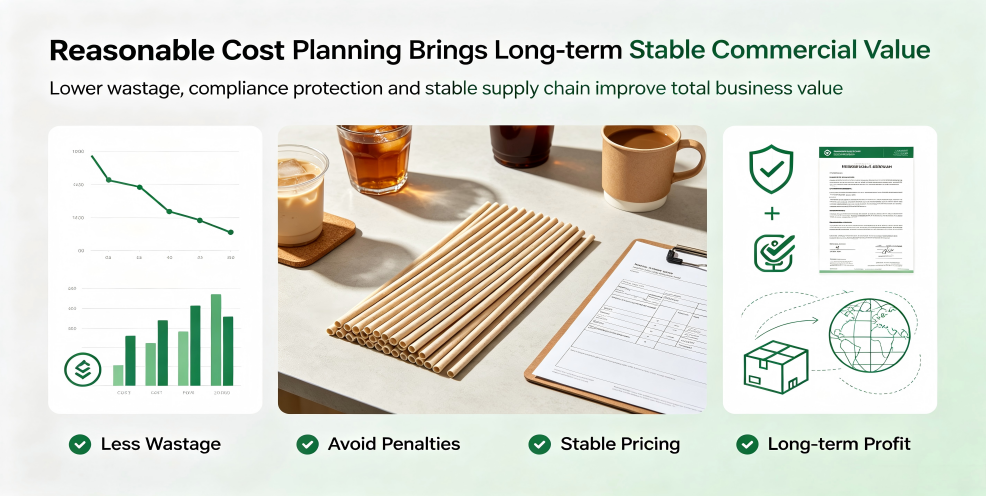
Many buyers tend to judge product value merely based on initial unit prices, and assume sugarcane straws cost too much compared with basic paper styles. However, viewing from long-term business operation and overall profit planning, high-quality compostable sugarcane straws deliver much more stable comprehensive benefits.
Thanks to their outstanding durability, businesses can effectively cut down on product wastage and reduce frequent replacement costs in daily use. More importantly, complete international compliance qualifications help merchants avoid unexpected losses caused by policy penalties, product returns and sales bans in regulated regions — such risk-control benefits easily outweigh the slight difference in upfront costs.
As the sugarcane fibre industry chain matures and large-scale production becomes more common, the overall wholesale price of bulk compostable straws has become more accessible. For clients seeking steady long-term cooperation, stable suppliers are able to offer favourable partnership pricing and priority order arrangement, helping downstream sellers lock in stable profit margins and expand local market share smoothly.
Conclusion: Sugarcane Straws Become An Inevitable Trend of Green Catering Supplies
The era when low-performance paper straws dominate the foodservice drinking straw market has officially passed. Under the joint promotion of global plastic restriction policies, consumer experience upgrading and circular economy development trend, high-quality, safe, compliant and practical sugarcane compostable straws have become the irreversible development trend of the industry.
MVI ECOPACK has always adhered to the production concept of environmental protection first and quality-oriented, focusing on creating high-standard PPWR compliant straws and home compostable sugarcane bagasse straws for global B2B buyers. Whether you are a catering chain operator, cross-border commodity importer, eco tableware wholesaler or event catering service provider, our plastic-free drinking straws can fully meet your bulk procurement, personalized customization and regional market compliance layout needs.
If you are looking for a stable, reliable and cost-effective supplier of bulk compostable straws, welcome to contact our professional business team at any time. We can provide free product samples, detailed product catalogs and exclusive bulk wholesale quotations for you, help you quickly complete the product replacement layout, seize the booming market dividend of global eco disposable tableware, and create a win-win sustainable business cooperation mode.
|
Require a private label service for Your Zero Waste Business? Our professional eco-team offers consulting services to help you develop a comprehensive RENEWABLE packaging solution, including private label production for your business. Contact us to align your business with sustainable practices and achieve your zero-waste goals together. |
FAQ: Eco-Friendly Coffee Packaging in Practice
Q1: Are sugarcane bagasse straws fully compliant with EU PPWR regulations?
Yes. Made of pure natural fiber without plastic coating, they own official EN13432 and BPI certifications, fully meeting PPWR requirements and safe for sales across European markets.
Q2: Do sugarcane straws turn soft easily in hot or cold drinks?
No. They feature great temperature resistance and firm texture, staying sturdy for hours in both hot beverages and icy drinks without deforming or getting soggy.
Q3: Are sugarcane straws better than traditional paper straws?
Definitely. They have no strange taste, higher durability and genuine compostability, fixing most practical drawbacks that paper straws cannot solve.
Q4: Can I get customized sugarcane straws for my brand?
Sure. Custom printed logos, exclusive sizes and diversified packaging styles are available to fit your brand promotion and business demands.
Q5: Are sugarcane straws cost-effective for bulk catering business?
Yes. Though slightly higher in unit price, they reduce usage waste and avoid policy penalty risks, bringing more stable long-term business benefits.