


Bakery packaging has quietly become part of the overall food experience. Customers notice whether a pastry box feels sturdy, whether a bread bag looks recyclable, and whether the packaging matches the quality of the product inside. That shift is exactly why eco-friendly bakery packaging has become such a major topic across cafés, bakeries, and takeaway food businesses.But here is the thing — sustainable packaging is not a one-size-fits-all solution. Different baked goods have very different needs, and the “best” choice depends entirely on what you are actually selling.
TABLE OF CONTENTS
- The Bakery Packaging Materials at a Glance
- Eco-Friendly Bakery Packaging: By Function
- Everyday Essentials: Kraft Paper Bakery Packaging
- Show-Stoppers: Window Bakery Boxes
- Heavy-Duty Heroes: Bagasse Bakery Containers
- Freshness First: Compostable and Biodegradable Options
- Certifications That Actually Matter
- The Real Cost of Eco-Friendly Packaging
- What Customers Actually Care About
Eco-Friendly Bakery Packaging: By Function
Let us look at bakery packaging through a practical lens—what each product category actually needs.
The Bakery Packaging Materials at a Glance
| Material | Best For | Oil Resistance | Heat Resistance | Compostable |
| Kraft Paper | Bread bags, pastry boxes | ★★☆ | ★★☆ | ★★★ (if uncoated ) |
| Window Boxes | Cupcakes, decorated cakes | ★★☆ | ★★☆ | Depends on base |
| Bagasse | Hot pastries, takeaway | ★★★ | ★★★ | ★★★ |
| Compostable Films | Cookies, delicate items | ★★★ | ★★☆ | ★★★ |
1. Everyday Essentials: Kraft Paper Bakery Packaging
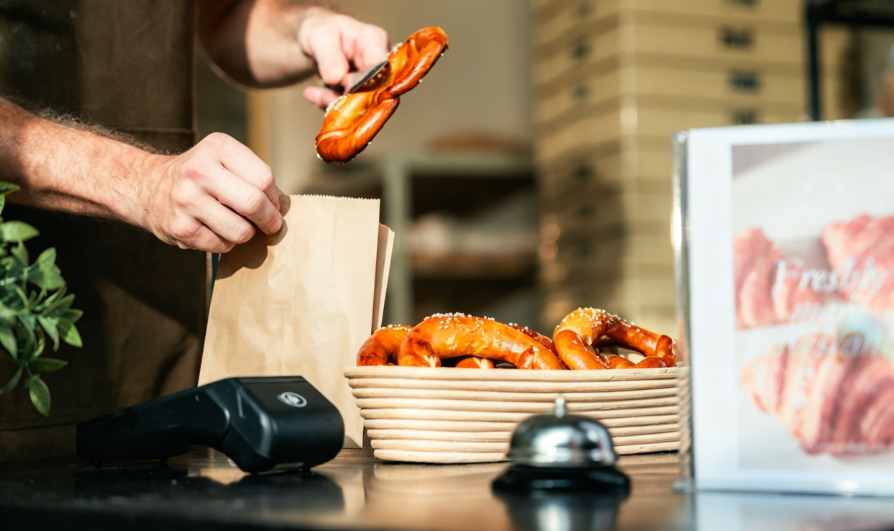
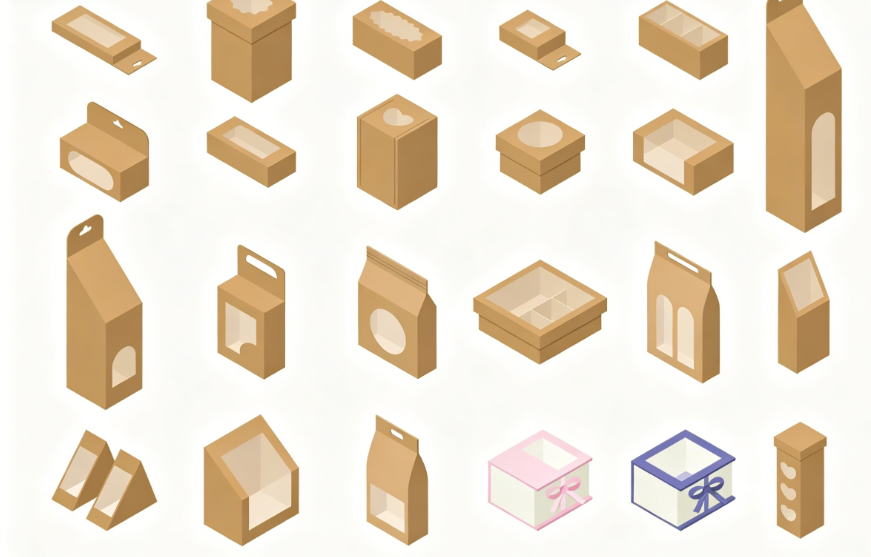
Kraft paper remains one of the most versatile bakery packaging materials—and for good reason. It is lightweight, easy to print on, relatively recyclable, and visually gives products a warmer, more natural feeling.It works especially well for bread bags, pastry boxes, cookie packaging, and takeaway bakery bags. Minimalist kraft packaging often makes bakery products feel more handmade and premium compared to glossy plastic packaging.A quick tip: Many bakeries pair kraft paper with food-safe coatings or internal liners to improve oil and moisture resistance without losing the natural look. However, standard kraft paper does have limitations. It absorbs oil and moisture easily, which is why the “just use paper” approach does not work for every product.
2. Show-Stoppers: Window Bakery Boxes
One packaging trend that has grown rapidly is window packaging—and the reason is simple: customers like seeing the product before they buy it.Window bakery boxes create instant visual trust. Customers can immediately judge freshness, decoration quality, and portion size without opening the packaging. In many modern bakeries, packaging itself has quietly become part of product display.This works especially well for cupcakes, decorated cakes, macarons, and premium desserts. If you are selling items where visual presentation is a major selling point, window boxes are worth considering.
3. Heavy-Duty Heroes: Bagasse Bakery Containers
For hot or oily bakery products, ordinary paper packaging often struggles with strength and grease resistance. That is why bagasse packaging has become increasingly common. Bagasse is made from sugarcane fiber residue and offers better rigidity and heat resistance than many standard paper materials. It is commonly used for hot pastries, baked snacks, takeaway desserts, and bakery meal boxes. Many brands prefer bagasse because it supports a stronger “plastic-free” image while still feeling sturdy enough for transport.
4. Freshness First: Compostable and Biodegradable Options
Compostable bakery packaging has become one of the biggest trends in recent years. But in real bakery operations, these materials are not always straightforward.One common challenge is barrier performance. Some biodegradable materials still struggle with moisture resistance, oil protection, or shelf-life stability compared with traditional options. The reality is that “compostable” does not automatically mean “better for your product.”That said, compostable films work well for cookies, delicate pastries, and items where freshness needs to be locked in during transport. Many bakeries now use compostable resealable bags for this reason — they combine sustainability with practical functionality.
Compostable vs. Biodegradable: What Is the Difference?
| Compostable | Biodegradable | |
| Definition | Breaks down into compost within a specific timeframe under controlled conditions | Breaks down naturally over time, but timeline and conditions vary |
| Standards | Must meet ASTM D6400 or EN 13432 | No universal standard currently |
| Real-world meaning | More rigorously tested | Often used loosely, sometimes misleadingly |
Certifications That Actually Matter
When browsing eco-friendly packaging options, you will likely encounter various certifications. Here are the ones worth knowing:
• ASTM D6400 — American standard for plastics and polymers designed to compost in municipal and industrial composting facilities.
• EN 13432 — European standard with similar requirements to ASTM D6400, widely recognized internationally.
• BPI (Biodegradable Products Institute) — US-based certification that verifies products meet ASTM D6400 standards.
• FSC (Forest Stewardship Council) — Certifies that paper and fiber materials come from responsibly managed forests.
Watch out for greenwashing. If a product claims to be “eco-friendly” but has no third-party certification, take that claim with a grain of salt. Vague marketing language is not the same as verified sustainability.
The Real Cost of Eco-Friendly Packaging
Let us talk money. Eco-friendly bakery packaging often costs more upfront — there is no way around that. But whether it actually costs more overall depends on a few factors.
Where you might save:
• Some regions offer tax incentives or subsidies for sustainable packaging
• Growing consumer preference for eco-friendly options means green packaging can support your brand positioning
• Reduced regulatory risk as single-use plastic bans expand across more areas
Where costs stay real:
• Higher per-unit prices for certified compostable materials
• Some materials require supply chain adjustments
• Performance limitations may require pairing with other materials
What Customers Actually Care About
Here is something interesting: many bakery and café owners have noticed that customers now pay more attention to packaging quality and sustainability than they did a few years ago. Some customers even ask directly whether packaging is recyclable or eco-friendly.But at the same time, customers still care most about one thing: whether the food arrives in good condition. If eco-friendly packaging causes soggy pastries or damaged cakes, customers will notice that too.That is why the future of bakery packaging will not rely on one “miracle material.” Instead, it will depend on smarter combinations—paper, plant fiber, coatings, and structural design — that balance sustainability with real-world usability.The best bakery packaging is not the one that sounds the most eco-friendly. It is the one that protects the food properly, feels good in customers' hands, and creates less waste without sacrificing the product experience.Before choosing any packaging, ask yourself: What does this product actually need? Start there, and the right choice usually becomes clear.
|
Need a Private Label Service for Your Zero Waste Business? Our professional eco-team offers consulting services to help you develop a comprehensive RNEWABLE packaging solution, including private label production for your business.Contact us to align your business with sustainable practices and achieve your zero-waste goals together. |
RELATE POST
GO PLASTIC-FREE WITH ECO PACK: WAYS STEP INTO A ZERO-PLASTIC LIVING
Molded Fiber Tableware: Why This Plastic Alternative Actually Works-MVI ECOPACK
Why Sustainable Bagasse Packaging Is the Future of Food Delivery Industry?


