


6 REASON CCHOOSE BAGASSE PLATES INSTEAD OF PAPER PLATES
Publisher: MVI ECO
2026/2/3
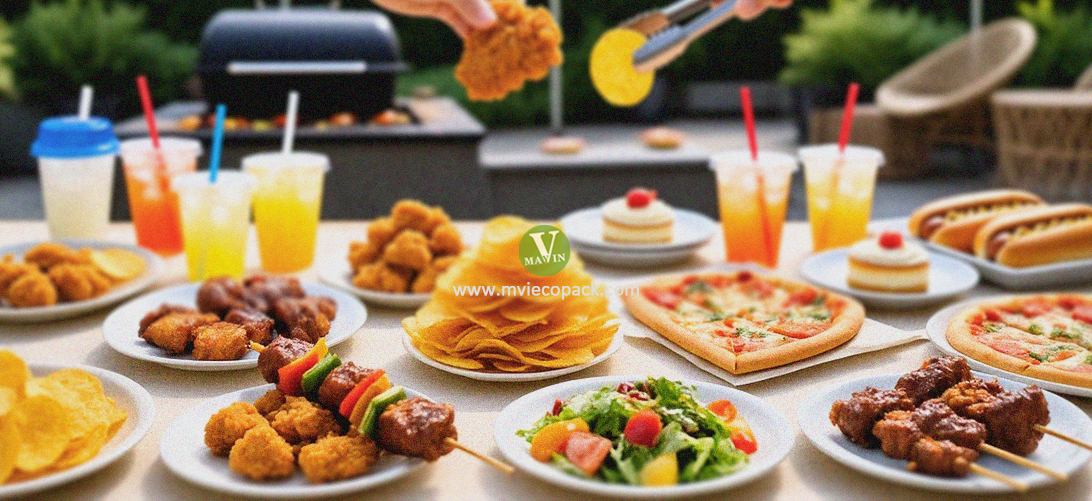
Table of Contents |
|
1.Understanding Bagasse: From Waste to Tableware 2.Reason 1: Certified Compostability 3.Reason 2: Superior Strength and Durability 4.Reason 3: Safe for Microwave, Oven, and Freezer Use 5.Reason 4: Completely Toxin and Chemical-Free 6.Reason 5: Oil and Grease Resistance Without Chemical Coatings 7.Reason 6: Versatile Natural Aesthetic 8.What Makes Quality Bagasse Plates Different 9.Making the Switch: Practical Transition Guide 10.Supporting a Sustainable Future |
Do you feel guilty about the time spent doing dishes after hosting gatherings? If so, you’ve probably considered using disposable plates. However, while paper plates offer convenience, they create a conflict with eco-friendly living that’s hard to ignore.
I discovered this tension firsthand last summer when hosting a backyard barbecue. Watching paper plates sag under saucy foods and knowing they’d sit in landfills for years left me searching for a better solution. That’s when I found bagasse plates—tableware made from sugarcane waste that offers what I call “guilt-free convenience.”
Understanding Bagasse: From Waste to Tableware
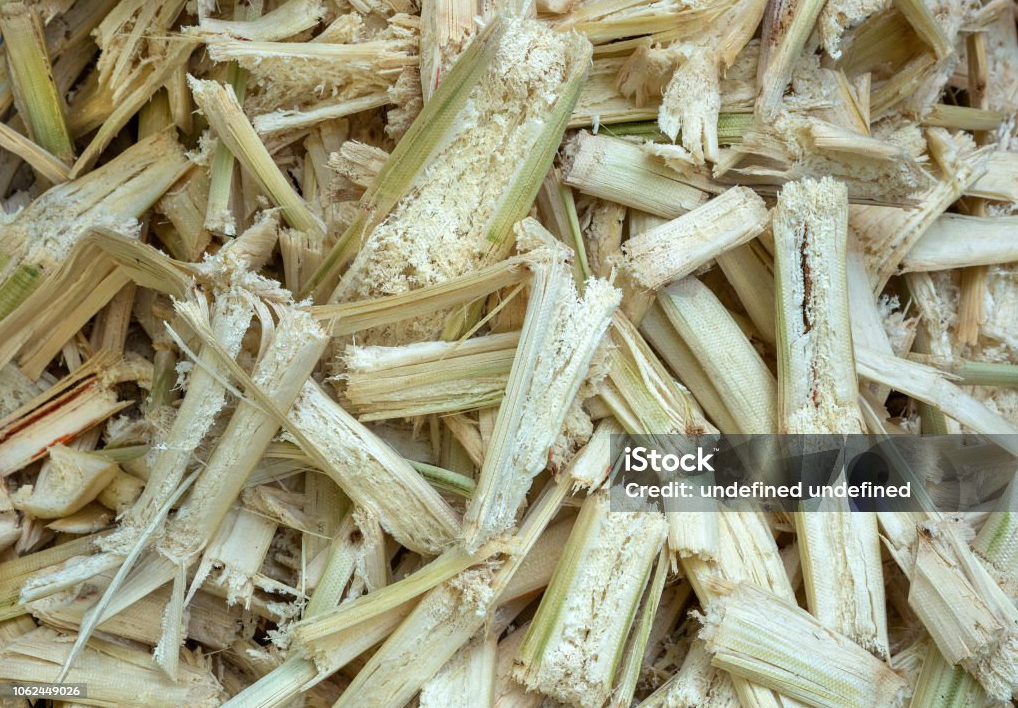
Before diving into the reasons, it’s worth understanding what bagasse actually is. In technical terms, bagasse is the fibrous matter left over after extracting juice from sugarcane stalks. Traditionally, this leftover material was either dumped in landfills or burned for disposal—both wasteful approaches that contribute to environmental problems.
Modern manufacturing has transformed this agricultural waste into functional tableware. The process involves collecting the sugarcane fiber, pulping it, and molding it under heat and pressure into plates, bowls, and containers. What makes this particularly clever is that we’re repurposing material that would otherwise be discarded, creating a true circular economy.
The environmental math is straightforward: instead of cutting down trees for paper plates or using petroleum for plastic plates, bagasse plates utilize renewable agricultural waste. Sugarcane is one of the fastest-growing plants on the planet, and since we’re using the byproduct of sugar production, there’s no additional resource extraction required.
Reason 1: Certified Compostability
Here’s where bagasse plates truly differentiate themselves from paper alternatives. Many paper plates claim to be “biodegradable,” but the reality is far more complex. Paper plates typically contain:
1.Plastic or wax coatings for grease resistance
2.Chemical bleaches for that bright white appearance
3.Synthetic adhesives that prevent natural decomposition
These additives mean paper plates can take years to break down in landfills, and they often don’t fully decompose even in home composting conditions.
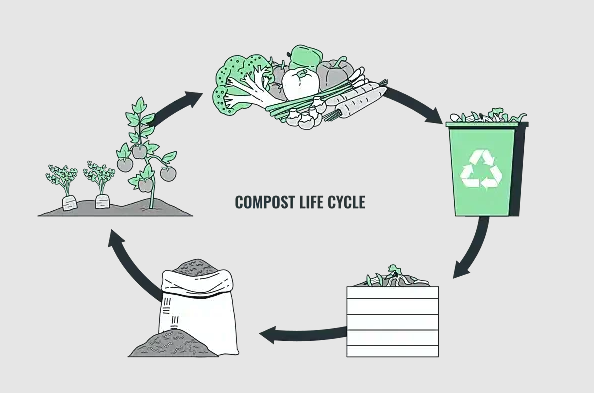
Bagasse plates are different. Quality bagasse plates carry official composting certifications such as BPI Certified Compostable (US standard), meaning they meet rigorous standards for biodegradation. Under proper composting conditions—whether commercial facilities or well-maintained home compost bins—bagasse plates begin breaking down within weeks.
The timeline is genuinely impressive: in commercial composting facilities that maintain temperatures of 130-160°F, bagasse plates decompose completely within 60-90 days. Even in home composting setups, they’ll fully break down within 3-4 months, leaving behind nutrient-rich soil amendment with no microplastic residue.
I’ve personally composted these plates in my backyard bin. Watching them transform into dark, crumbly compost while paper plates from the same event remained largely intact was the proof I needed. This is true “back-to-nature” performance, not marketing spin.
The carbon footprint difference is substantial. Manufacturing bagasse plates produces significantly lower greenhouse gas emissions compared to paper plate production, which requires energy-intensive pulping, bleaching, and coating processes.
Reason 2: Superior Strength and Durability
Anyone who’s used flimsy paper plates knows the frustration: they tear, bend, and collapse under the weight of food, especially when dealing with sauces, liquids, or heavy portions. I used to automatically double-stack paper plates for anything more substantial than a sandwich, which essentially doubles your cost and waste.
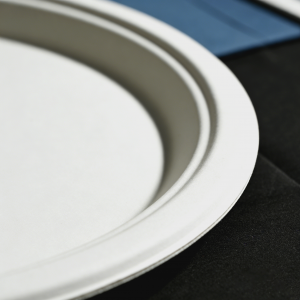
Bagasse plates solve this problem through their natural fiber structure. The compressed sugarcane fibers create a rigid matrix that maintains integrity even under challenging conditions. Here’s what this means in practical terms:
1.Load capacity: Bagasse plates can hold heavy meals including saucy pasta, burgers with condiments, or full dinner portions without bending, tearing, or leaking. I’ve served everything from barbecue ribs dripping with sauce to curry dishes, and the plates hold firm throughout the entire meal.
2.Structural stability: The plates don’t develop the characteristic sag that paper plates get when loaded. This matters significantly at standing receptions or outdoor events where guests need to hold their plates while eating and socializing.
3.Cut-resistant surface: The fiber density means you can actually cut food on bagasse plates without cutting through—try this with paper plates and you’ll immediately see the difference. This is particularly useful for items like pizza, sandwiches, or any food requiring cutlery.
4.No double-stacking needed: This single factor transforms the economics. When I tracked costs over multiple events, eliminating double-stacking brought the actual per-person cost nearly equal to paper plates while providing dramatically better performance.
The durability extends to various food types. Whether serving greasy pizza, soupy noodles, or salads with oily dressings, bagasse plates maintain their structure from the first bite to the last, creating a genuinely better dining experience for guests.
Reason 3: Safe for Microwave, Oven, and Freezer Use
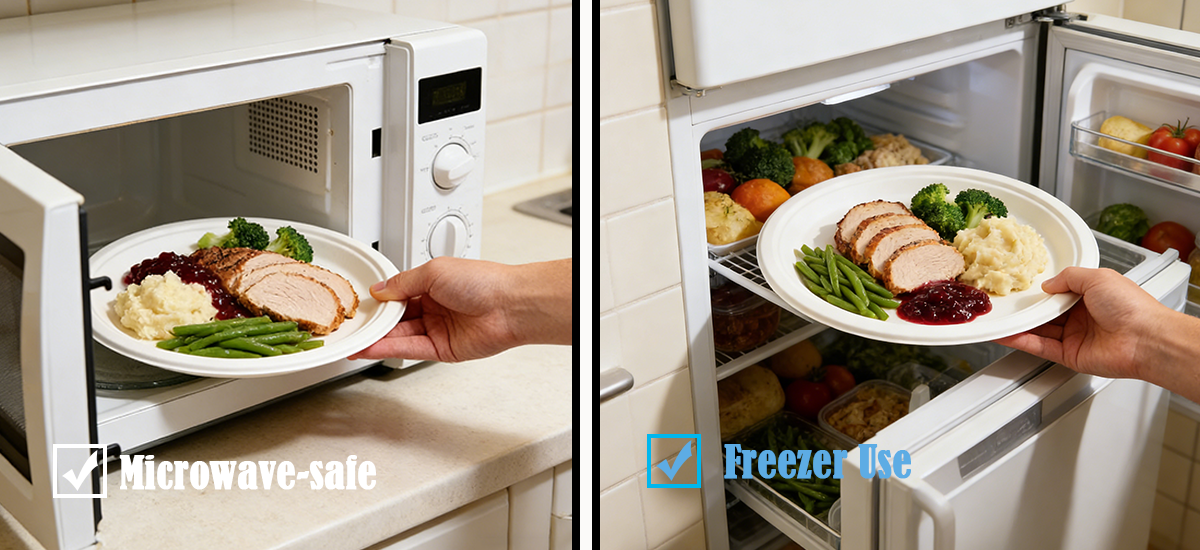
This versatility genuinely surprised me and sets bagasse plates apart from both paper and plastic alternatives. The natural sugarcane fiber can withstand extreme temperatures in both directions, opening up uses beyond simple serving plates.
1.Microwave safety: Bagasse plates are microwave-safe and can handle reheating for 2-3 minutes without warping or releasing harmful compounds. Paper plates often contain synthetic coatings that aren’t suitable for heating and may leach chemicals into food. I regularly use bagasse plates for meal prep—assembling portions, refrigerating them, then microwaving directly without transferring to another container.
2.Oven compatibility: These plates can even go into conventional ovens for short-term heating or warming, something paper plates absolutely cannot do safely. This makes them surprisingly useful for keeping food warm at buffets or catering events.
3.Freezer stability: Unlike paper which becomes brittle and cracks at freezing temperatures, bagasse maintains structural integrity. I’ve frozen individual meal portions on bagasse plates, wrapped them, and stored them for up to two weeks without any degradation in plate quality.
What makes this particularly valuable is the chemical safety. Since bagasse plates are made from natural plant fibers without synthetic coatings, there’s no risk of harmful chemical exposure even when subjected to temperature extremes. You won’t find BPA, PFAS (forever chemicals), or other toxic substances that plague many plastic products and coated paper plates.
This multi-temperature functionality transforms bagasse plates from simple disposables into genuine kitchen tools. They serve, store, freeze, and reheat—all while remaining completely food-safe and compostable at end of life.
Reason 4: Completely Toxin and Chemical-Free
In an era where we’re increasingly aware of harmful chemicals in everyday products, the composition of our tableware matters more than we might think. Paper and plastic plates often contain concerning substances:
In paper plates:
1)Bleaching chemicals used to achieve white appearance
2)Plastic or wax coatings containing potential endocrine disruptors
3)Adhesives with formaldehyde or other volatile organic compounds
4)Inks and dyes that may contain heavy metals
In plastic plates:
1)BPA (Bisphenol A) linked to hormonal disruption
2)PFAS chemicals used for grease resistance
3)Phthalates from manufacturing processes
4)Microplastics that leach into food
Bagasse plates contain none of these concerning substances. They’re made exclusively from plant-based sugarcane fiber without chemical additives. The manufacturing process uses heat and pressure to mold the fiber—no toxic binders, coatings, or synthetic materials required.
This purity is particularly important when serving hot or acidic foods, which can cause chemicals to leach from conventional disposable plates into your meal. With bagasse, there’s no risk of chemical migration regardless of food temperature or acidity level.
Quality bagasse plates undergo rigorous food contact safety testing to ensure they meet international standards. They’re certified safe for direct contact with all food types, including hot, cold, wet, dry, acidic, and fatty foods.
For families with children, elderly individuals, or anyone with chemical sensitivities, this clean composition provides peace of mind. You’re not exposing yourself or your loved ones to potentially harmful substances with every meal.
Reason 5: Oil and Grease Resistance Without Chemical Coatings
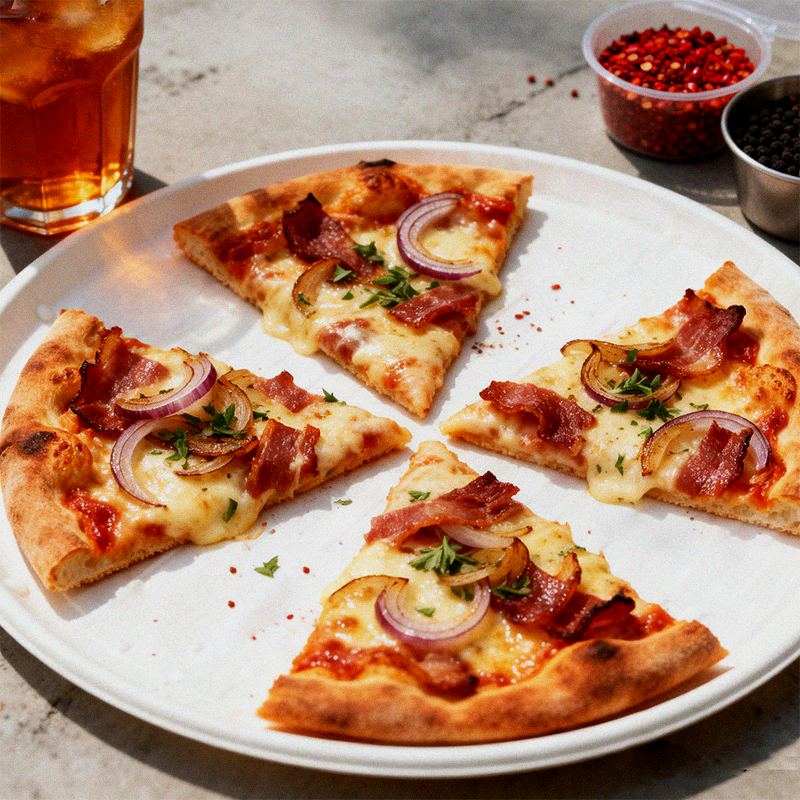
One of paper plates’ biggest weaknesses is their inability to handle greasy or oily foods. Watch what happens when you place pizza, fried foods, or dishes with oil-based dressings on paper plates—within minutes, grease spots appear, the plate weakens, and eventually liquids seep through.
Paper manufacturers address this by adding plastic linings or wax coatings, but these synthetic treatments:
1)Prevent the plates from being truly compostable
2)May contain harmful chemicals
3)Break down under extended contact with hot or acidic foods
4)Add to manufacturing costs and environmental impact
Bagasse plates achieve grease resistance through natural fiber density rather than chemical additives. The compressed sugarcane fibers create inherent resistance to liquid penetration without any synthetic coatings.
I’ve conducted side-by-side tests with identical foods:
1.Pizza test: Greasy pepperoni pizza on a paper plate showed visible oil staining within 10 minutes. The same pizza on a bagasse plate—no breakthrough even after an hour.
2.Saucy foods: Pasta with marinara, barbecue with extra sauce, Indian curries—all maintained plate integrity on bagasse while paper plates showed weakness within 15-20 minutes.
3.Oil-based dressings: Salads with generous vinaigrette or Caesar dressing sat comfortably on bagasse plates throughout entire meals without any seepage.
This natural grease resistance has practical implications beyond just avoiding mess. Food stays at proper temperature longer when the plate maintains its insulating properties. Guests can eat at a comfortable pace without rushing before their plate fails. For catering operations, this reliability reduces complaints and creates better customer experiences.
The performance difference is particularly noticeable with foods that combine heat, weight, and grease—exactly the conditions where paper plates struggle most.
Reason 6: Versatile Natural Aesthetic
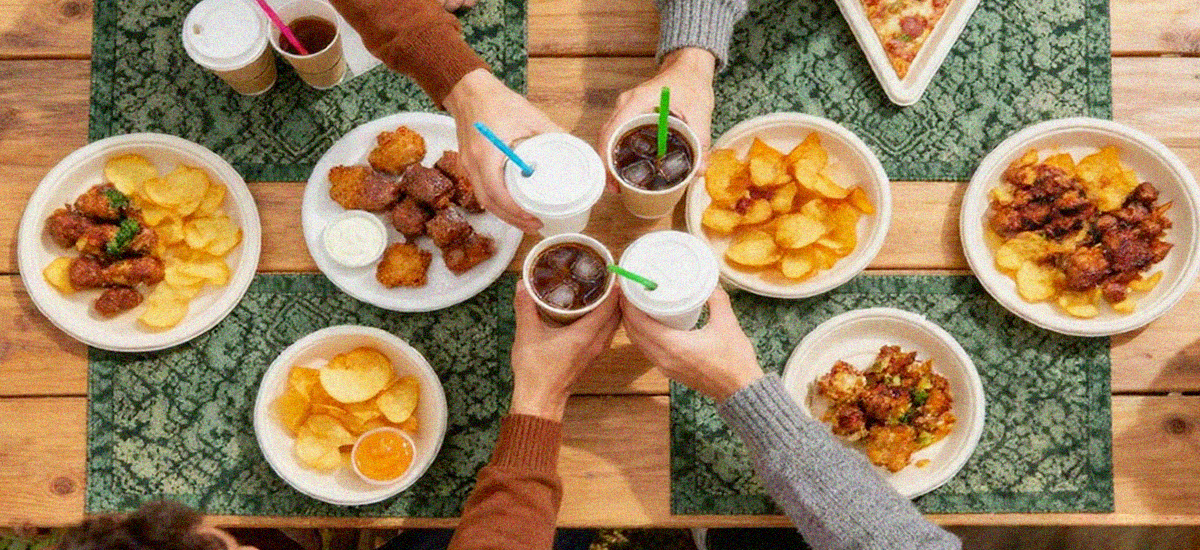
The natural beige-tan color and subtle texture of bagasse plates create a more sophisticated presentation compared to stark white paper plates.
1.Versatility across occasions: These plates work equally well for:
1)Casual backyard barbecues
2)Children’s birthday parties
3)Corporate lunch events
4)Wedding receptions (for appetizers or desserts)
5)Food truck and takeout service
6)Farmers market vendors
2.Tactile quality: There’s a substantive feel to bagasse plates that paper lacks. Guests notice the difference—the plates feel sturdy and thoughtful rather than cheap and disposable. This subtle quality signal contributes to overall event atmosphere and can enhance perceived value in commercial settings.
3.Natural material aesthetic: For events with eco-conscious themes or natural décor, bagasse plates align perfectly with the overall aesthetic. They blend beautifully with wooden tables, greenery, and outdoor settings in ways that synthetic-looking paper plates never quite achieve.
What Makes Quality Bagasse Plates Different
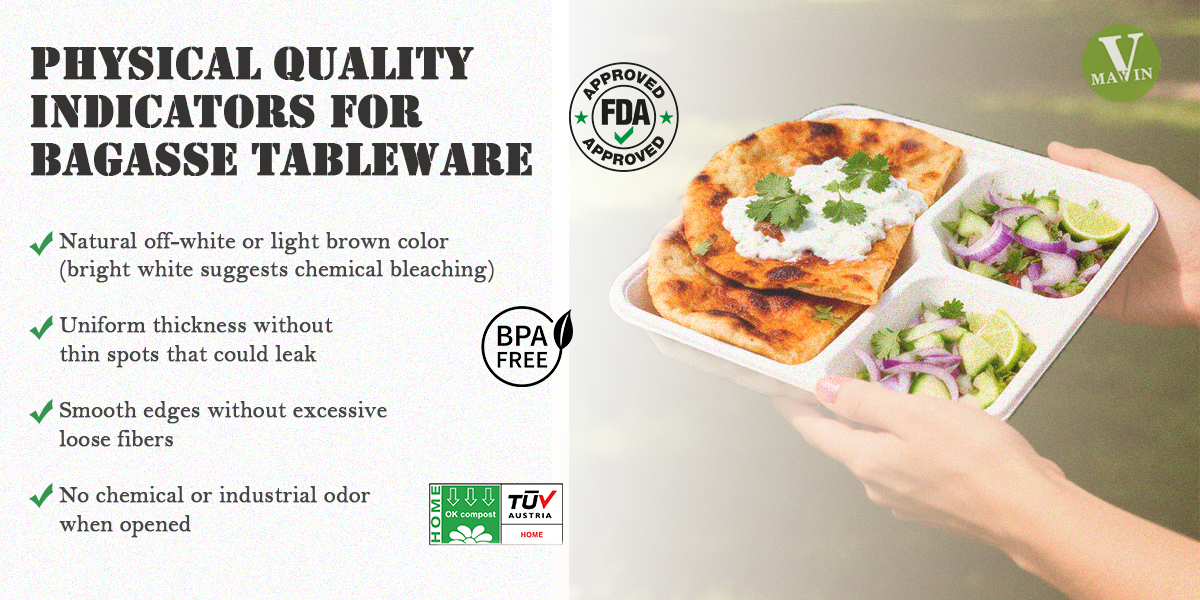
Not all bagasse plates deliver the same performance. Manufacturing quality varies significantly, and understanding what to look for ensures you get genuine benefits:
1.100% pure bagasse composition: Quality plates specify “100% sugarcane bagasse” or “pure bagasse fiber” without blended materials like bamboo, wheat straw, or wood pulp. Pure bagasse offers superior heat resistance and structural integrity.
2.Proper thickness: Look for plates between 0.8mm to 1.2mm thickness. Thinner plates may not provide adequate strength for heavier foods. For main courses, minimum 1.0mm thickness is recommended.
3.Official certifications: Legitimate compostable certifications include:
1)BPI Certified Compostable (US)
2)TÜV Austria OK Compost
3)European Standard EN 13432
4)ASTM D6400/D6868 compliance
These verify actual biodegradation performance, not just marketing claims.
4.Food safety testing: Quality manufacturers rigorously test their plates for food contact safety, ensuring no harmful substance migration even with hot, acidic, or fatty foods.
4.Smooth edges and consistent color: Well-manufactured plates have reinforced, smooth edges and relatively uniform natural beige-tan coloring. Rough edges or extreme color variations indicate quality issues.
Making the Switch: Practical Transition Guide
Transitioning from paper to bagasse plates is straightforward, but here’s how to do it successfully:
1.Start with a test purchase: Buy a single pack (50-100 plates) before committing to bulk. Test them with your typical foods, especially items that have challenged paper plates previously.
2.Calculate true costs: Track your current paper plate usage including double-stacking and replacements. Compare against single-use bagasse costs. The gap is often smaller than expected.
3.Choose appropriate sizes:
1)9-10 inch plates for main courses
2)6-7 inch plates for appetizers, desserts, or children’s portions
3)Bowls for soups, salads, or pasta dishes
4.Verify composting options: Check if your local municipality accepts compostable tableware in green waste programs. If not, bagasse still degrades faster in landfills than coated paper plates.
5.Store properly: Keep plates in original packaging in a dry location. Unlike paper, they don’t degrade in storage but moisture can affect rigidity.
6.Educate users: Whether family, guests, or customers, let people know these plates are compostable. Many appreciate knowing their waste is handled responsibly.
Supporting a Sustainable Future

Choosing bagasse plates represents more than just a product switch—it’s participation in a circular economy that transforms agricultural waste into functional products that return safely to nature.
Every time you choose bagasse over paper plates, you’re:
1.Reducing deforestation: No trees cut down for your tableware
2.Repurposing waste: Using material that would otherwise be burned or landfilled
3.Lowering carbon emissions: Significantly smaller manufacturing footprint
4.Preventing microplastic pollution: No synthetic coatings breaking down in ecosystems
5.Supporting renewable agriculture: Utilizing fast-growing sugarcane byproducts
6.Promoting composting infrastructure: Creating demand for proper waste processing
The cumulative impact of these individual choices matters. When consumers consistently choose sustainable alternatives, it drives broader market changes and encourages more responsible manufacturing practices across industries.
For businesses, offering bagasse tableware demonstrates environmental commitment to increasingly eco-conscious customers. For families, it’s teaching children that convenience and sustainability can coexist—that we don’t have to choose between what’s easy and what’s right.
Frequently Asked Questions
1.Why are bagasse plates better than paper plates?
Bagasse plates offer superior strength, genuine compostability without chemical coatings, heat resistance up to 200°F, and natural grease barriers—all while being made from agricultural waste rather than trees.
2.Are bagasse plates microwave-safe compared to paper plates?
Yes, bagasse plates are microwave-safe for 2-3 minutes and can handle heat without warping or releasing chemicals, unlike many paper plates with synthetic coatings that aren’t suitable for heating.
3.What makes bagasse plates more eco-friendly than paper plates?
Bagasse utilizes sugarcane waste that would otherwise be burned or landfilled, requires no tree harvesting, produces 60% lower carbon emissions in manufacturing, and fully composts within 60-90 days without leaving microplastics.
4.Do bagasse plates compost faster than paper plates?
Yes—bagasse plates decompose within 60-90 days in commercial composting and 3-4 months in home composting. Paper plates with coatings can take 5-10 years and may never fully break down.
5.Are bagasse plates more durable for hot or heavy foods?
Absolutely. Bagasse plates can support 3-4 pounds without bending or leaking, maintain integrity with sauces and greasy foods, and resist heat up to 200°F—significantly outperforming paper plates.
6.Can I use bagasse plates in the freezer and oven?
Yes, bagasse plates are freezer-safe and can even be used in conventional ovens for short-term warming, providing versatility that paper plates cannot match.
7.What are the main differences between paper and bagasse plates?
Bagasse plates are made from sugarcane waste (not trees), have no chemical coatings, are naturally grease-resistant, fully compostable, microwave/oven/freezer safe, and structurally stronger than paper alternatives.
|
Want to Achieve Zero Waste for Your Food Service Business? Our professional eco-team offers consulting services to help you develop a comprehensive compostable packaging solution, including home compostable tableware options. Contact us to align your business with sustainable practices and achieve your zero-waste goals together. |

-The End-
|
|
Related Articles:
CAN YOU REALLY HAVE A HAND-FREE, ZERO-WASTE KITCHEN?THE TRUTH ABOUT TRULY COMPOSTABLE PLATE
Sturdy & Truly Compostable? Your Guide to Choosing Bagasse Straws & Dodging Greenwashing
Why Sustainable Bagasse Packaging Is the Future of Food Delivery Industry?
IS BAGASSE TABLEWARE SAFE FOR KIDS? EVERY PARENTS SHOULD KNOW THESE.
SUGARCANE BAGASSE PLATES vs PAPER PLATES : WHAT’S THE REAL DIFFERENCE?

Web: www.mviecopack.com
Email:orders@mvi-ecopack.com
Telephone: 0771-3182966


