


1.png)
PPWR 2026: What Restaurants Need to Know
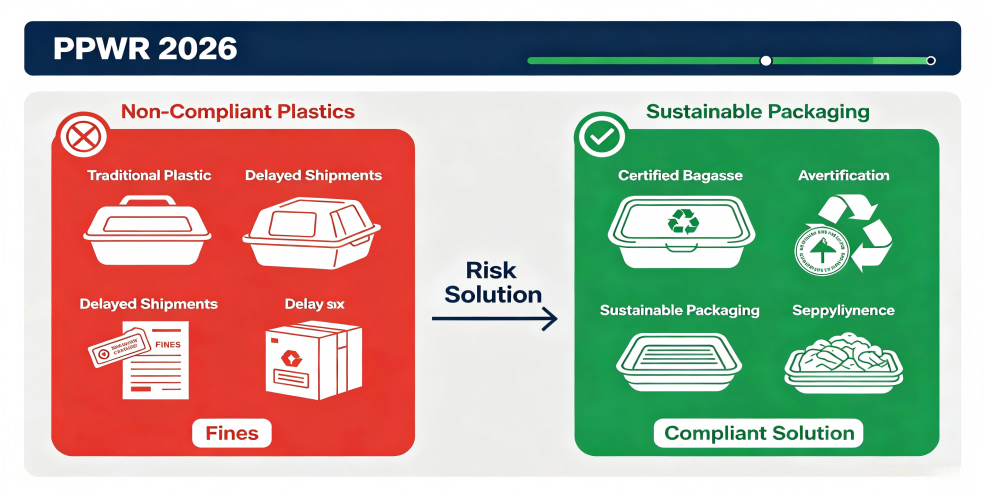
If you’re a restaurant owner, catering operator, or foodservice procurement manager importing packaging into the EU, 2026 brings one non-negotiable challenge: full PPWR compliance. The European Union’s updated Packaging and Packaging Waste Regulation has officially rolled out stricter cross-border inspection standards, tighter material bans, and zero-tolerance rules for non-compliant food packaging. What was once a minor administrative detail has now become a critical business risk. Every week, countless food businesses face delayed shipments, customs holds, unexpected penalty fines, and even rejected packaging batches simply because their traditional plastic and foam takeout containers fail to meet the new PPWR criteria. The good news? You can eliminate all these costly headaches entirely by switching to certified sugarcane bagasse food containers — the most straightforward, cost-effective, and fully compliant packaging solution for the 2026 PPWR era.
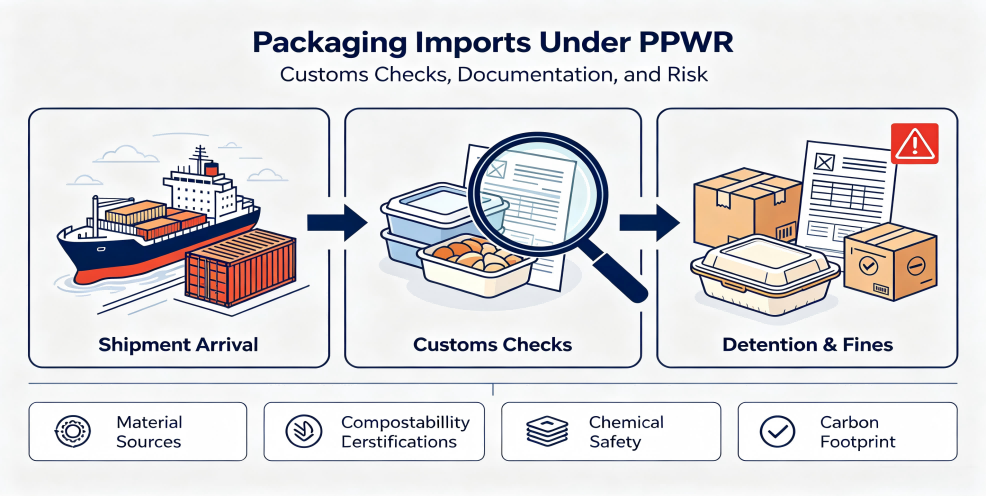
Packaging Imports Under PPWR
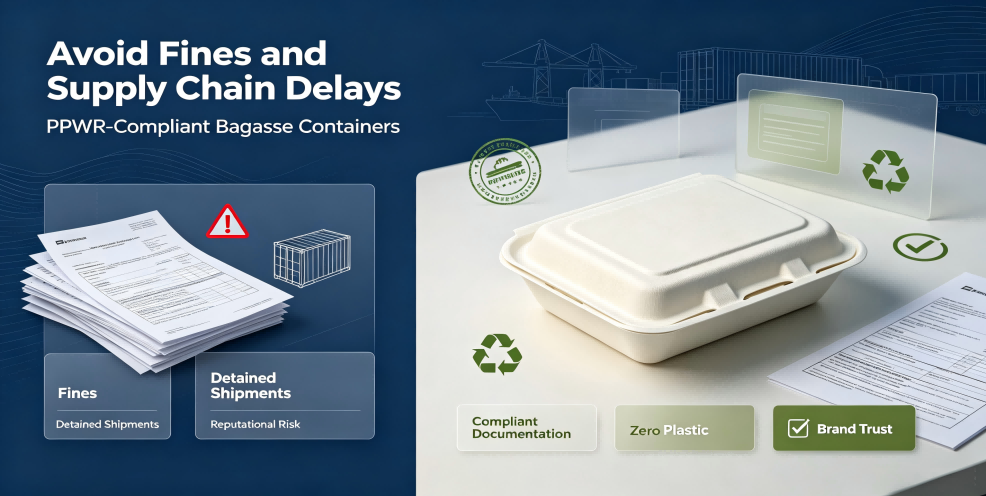
Let’s cut through the complicated legal jargon and focus on what PPWR 2026 actually means for your daily operations. The updated regulation prioritizes circular, low-carbon, and non-toxic packaging materials, while phasing out single-use fossil-fuel-based plastics that dominate the traditional takeout packaging market. Unlike previous loose policies, 2026 PPWR enforces strict customs verification for all imported food packaging. Customs officers now conduct rigorous checks on material sources, compostability certifications, chemical safety indicators, and carbon footprint data. Any packaging without complete, standardized compliance documentation will be detained immediately. Worse still, repeated non-compliance violations can result in fines up to 4% of your global annual turnover, not to mention disrupted supply chains, stalled business operations, and damaged brand credibility in the competitive EU market. For small and medium-sized restaurants and catering businesses, one customs hold or fine is often enough to erase months of profit.
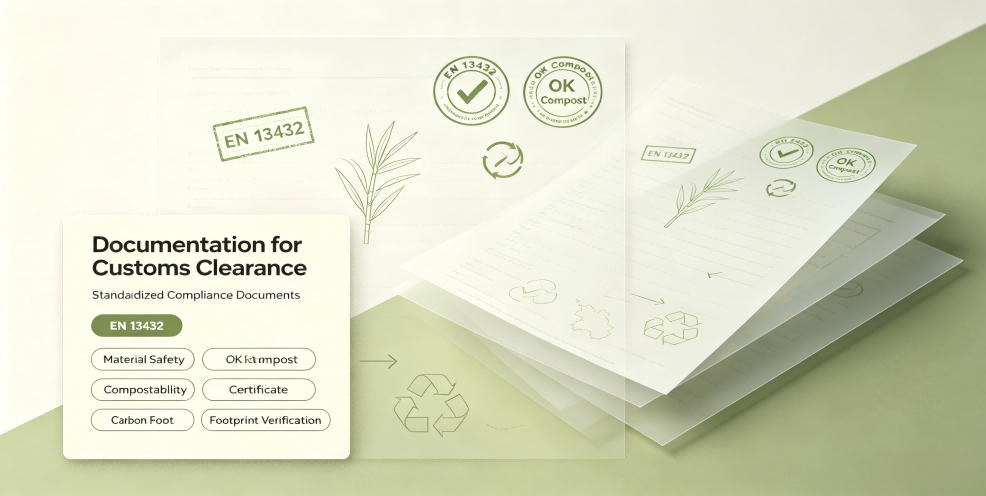
This is where our sugarcane bagasse containers stand out as the perfect PPWR-compliant solution, designed specifically to help foodservice businesses bypass all cross-border compliance troubles. Unlike plastic, foam, or even ordinary paper packaging that struggles to meet 2026’s strict standards, our bagasse clamshell containers are manufactured from 100% pure sugarcane agricultural waste, with zero virgin plastic, zero petroleum ingredients, and zero harmful additives. Most importantly, our products hold full EN 13432 and OK Compost certifications — the official gold-standard credentials explicitly recognized and accepted by EU PPWR regulations. Free from PFAS forever chemicals, heavy metals, and toxic residues, our compostable takeout containers fully comply with the EU’s latest food contact safety and environmental protection rules, completely eliminating the core compliance risks that trap plastic packaging importers.
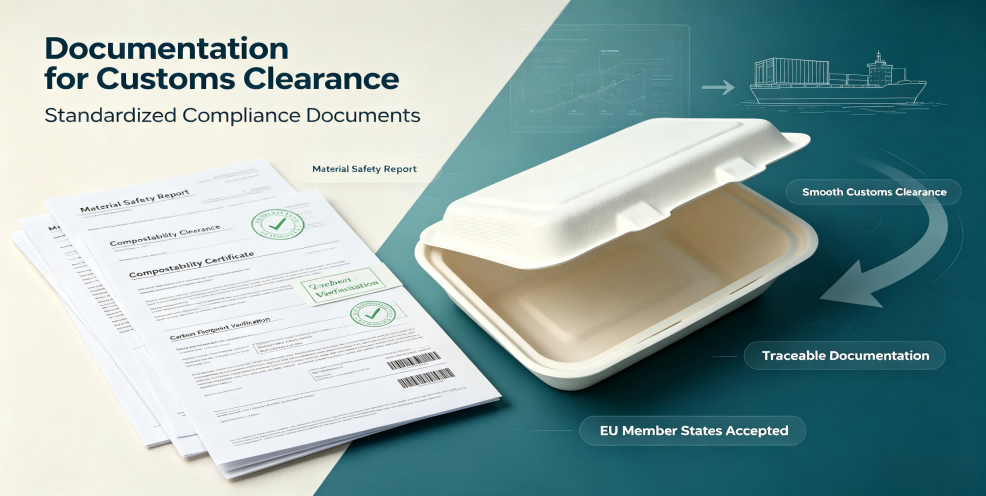
Beyond official certification advantages, our sugarcane bagasse containers solve your most practical customs and operational pain points. One of the biggest struggles for EU food businesses in 2026 is fragmented certification and cumbersome traceability. Many cheap alternative packaging lacks complete formal documentation, forcing your team to waste massive time and resources sorting out customs materials, only to face unpredictable inspection failures. We streamline the entire process for you: every batch of our eco-friendly food packaging comes with complete, standardized compliance documents, including material safety reports, compostability certificates, and carbon footprint verification files. These universally accepted documents ensure smooth customs clearance across all EU member states, no more shipment delays, no more last-minute customs emergencies, and no more hidden compliance risks.
 Avoid Fines and Supply Chain Delays
Crucially, choosing our PPWR-compliant bagasse containers delivers tangible long-term profits for your business, far outweighing any minor upfront cost difference. While ordinary plastic packaging may seem cheaper at first glance, hidden costs including customs fines, detained shipment losses, waste disposal fees, and brand reputation damage make them extremely risky in 2026. In contrast, our sustainable foodservice packaging helps you avoid all PPWR-related penalties and supply chain disruptions. Meanwhile, EU consumers are more eco-conscious than ever before. Running a fully PPWR-compliant, zero-plastic food service business significantly boosts your brand image, attracts green-focused customers, and builds long-term customer loyalty — creating steady revenue growth for your restaurant or catering business.
 Performance Meets Compliance
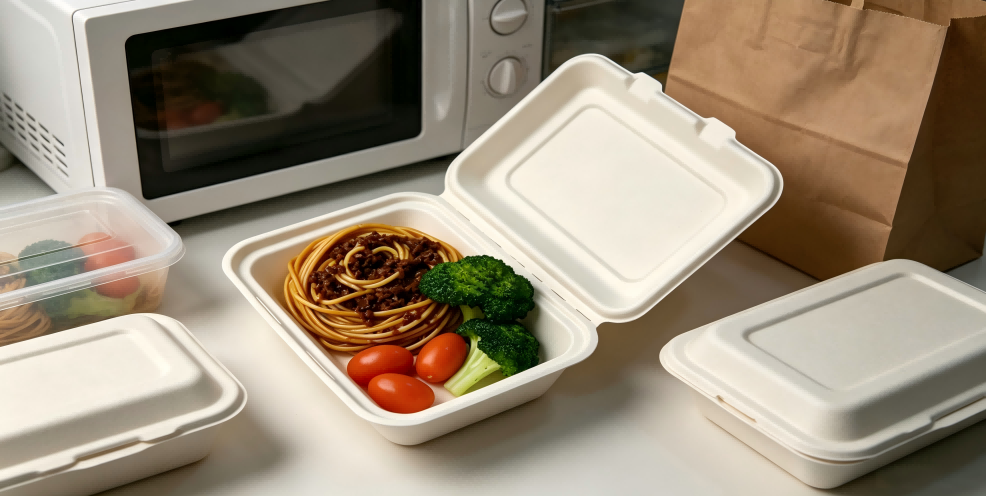
Functional performance is just as critical as PPWR compliance for commercial takeout packaging, and our food-grade bagasse packaging delivers reliable usability without eco-friendly compromises. Many operators avoid generic compostable packaging due to common issues like poor heat resistance, oil leakage, flimsy structure, and inability to handle hot or frozen meals — problems that hurt customer experience and daily operations. Our premium sugarcane bagasse clamshell containers are professionally molded with high-density sugarcane pulp for commercial foodservice use. Sturdy, heat-resistant, and fully oil and leak-proof, these compostable takeout containers safely hold hot dishes, oily fried foods, desserts, and cold meals without deforming or leaking. They are microwave and freezer-safe, fitting all takeout and catering scenarios from casual fast food to premium food delivery. Unlike low-grade eco-packaging that sacrifices performance for compliance, our sustainable foodservice packaging meets strict 2026 PPWR standards while delivering consistent commercial-grade quality, helping your business stay fully compliant, build a green brand, and preserve excellent customer dining experiences.
Future-Proof Your Restaurant
There’s no need to struggle with complicated PPWR policy adjustments or risky packaging replacements in 2026. Upgrading your packaging to our certified sugarcane bagasse containers is the simplest, fastest, and most reliable way to fully comply with EU regulations, eliminate customs headaches, future-proof your business, and stand out in the competitive European foodservice market.
Request Samples and Compliance Support
Ready to ditch PPWR compliance risks and eliminate costly EU customs headaches for good? Contact our professional team today to receive complete official PPWR compliance documents and free product samples. Secure steady cross-border shipping and start your hassle-free, fully compliant green packaging upgrade for your food business right now.
|
Require a private label service for Your Zero Waste Business? Our professional eco-team offers consulting services to help you develop a comprehensive RENEWABLE packaging solution, including private label production for your business. Contact us to align your business with sustainable practices and achieve your zero-waste goals together. |
FAQ
- Q: Are sugarcane bagasse packaging fully compliant with 2026 PPWR rules?
- A: Yes. It holds EN13432 and OK Compost certifications, free of PFAS and harmful substances, fully meeting EU PPWR standards.
- Q: Can these eco packaging pass EU customs smoothly?
- A: Absolutely. We provide complete compliance papers to avoid shipment detention and inspection delays.
- Q: Is bagasse packaging practical for daily restaurant use?
- A: It is heat, oil and leak proof, microwave & freezer safe, perfect for takeaway and catering service.
- Q: Will switching to bagasse packaging raise business costs greatly?
- A: Slightly higher raw cost offsets fines and loss risks, bringing long-term stable profits and brand advantages.
- Q: Do I need special conditions to use compostable bagasse packaging?
- A: It supports both home and industrial composting, easy to dispose and fully fits EU waste regulations.
RELATED POST
Molded Fiber Tableware: Why This Plastic Alternative Actually Works—MVI ECOPACK
Why Sustainable Bagasse Packaging Is the Future of the Food Delivery Industry?


