


SUGARCANE BAGASSE PLATES vs PAPER PLATES : WHAT’S THE REAL DIFFERENCE?
Publisher: MVI ECO
2026/1/29
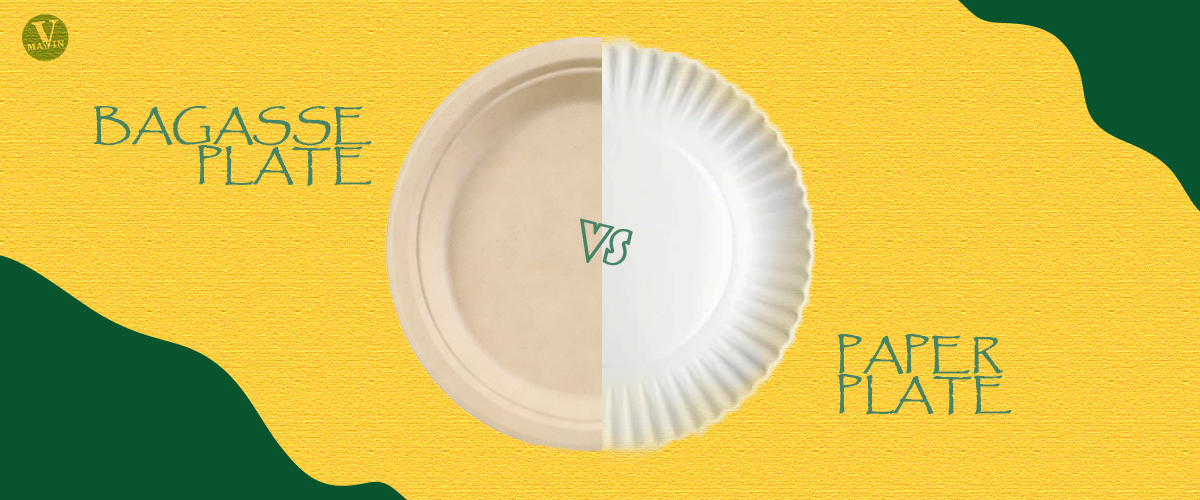
Table of Contents |
| 1.Where Do They Come From?(Bagasse Waste vs wood pulp) 2.What Happens After You’re Done With Them?(Will they Compsting or not?) 3.Which One Should You Choose?(Guidance to help you choose reasonable) |
Choosing eco-friendly dinnerware can be surprisingly tricky—trust me, I’ve been there. You walk into a store or scroll online, and every option screams “compostable!” or “biodegradable” But when you’re stuck between bagasse plates and paper plates, do those buzzwords actually mean anything? Clearly, I’m not the only one feeling this confusion—more and more people are asking the same question when choosing between these two eco-options. The truth is, these two eco-options are worlds apart, and there’s no one-size-fits-all “best” choice. It all comes down to what you need, and how well you understand their true stories.
Let’s break down what makes them unique: where they come from, how they perform on your table, what happens to them after you’re done, and which one fits YOUR life. Because the best eco-choice isn’t the one that sounds good—it’s the one you’ll actually use, and dispose of properly.
First Things First: Where Do They Come From?
The biggest difference between bagasse plates and paper plates starts at the very beginning—their raw materials. It’s like two totally different life stories: one is about turning waste into treasure, the other is about transforming a dedicated resource. More and more of us are caring about this too—we’re all becoming more intentional about where our products come from, and wanting to know the story behind the materials.
Let’s start with paper plates. Most of us know they’re made from wood pulp—from trees. Now, don’t get me wrong: many paper plate brands use pulp from sustainably managed forests, or even recycled paper, which is a step in the right direction. But at the end of the day, their main job is to turn wood fiber (a dedicated resource—trees grown or harvested specifically for this purpose, in most cases) into a convenient, single-use plate. And here’s a detail most people miss: almost all paper plates have a thin coating of polyethylene (PE) plastic or wax to stop them from leaking. That coating? It’s make-or-break for how well they work—and how they break down later.
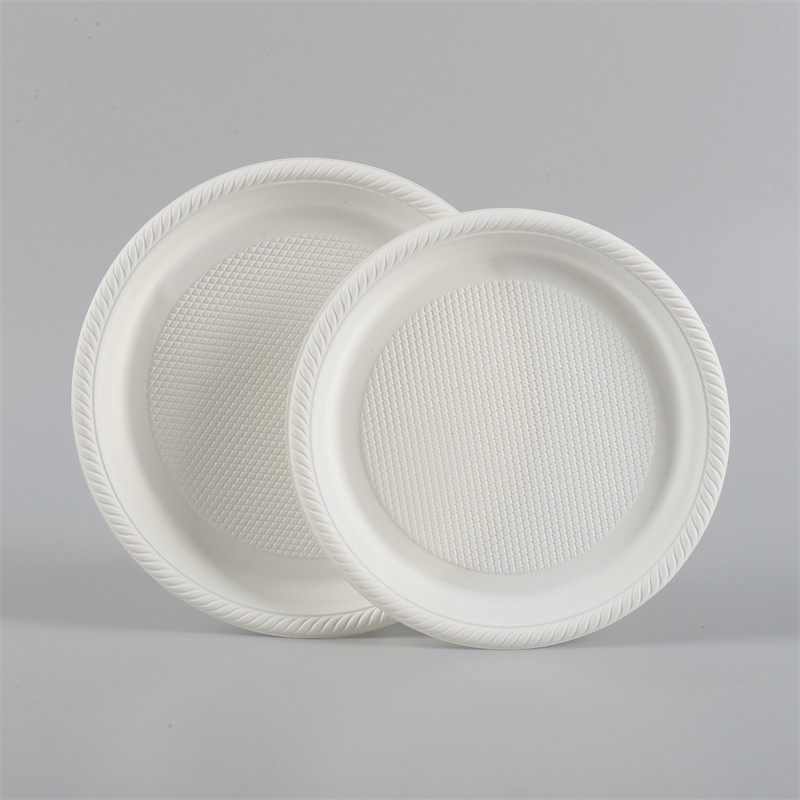
Bagasse plates, on the other hand, are the ultimate upcycling heroes. Bagasse is the dry, pulpy leftover stuff after sugarcane stalks are crushed to make juice—think of it as sugarcane’s “waste.” Instead of burning it (which pollutes the air) or throwing it away (which clogs landfills), manufacturers collect this fibrous byproduct, clean it, and mold it into plates under heat and pressure. That’s right: these plates are made from something that would otherwise be trash. Every bagasse plate you use is turning a disposal problem into a useful product—and that’s why upcycled bagasse plates are gaining so much popularity in the eco-dinnerware space.
How Do They Perform on Your Table?
Theory is great, but let’s be real—what matters most is how these plates hold up when you’re serving your favorite meal. I’ve tested both, and let me tell you: their structural differences become impossible to ignore when you’re piling on BBQ ribs, pouring pasta sauce, or heating up leftovers. I know I’m not alone in this—we all care about whether our eco-plates can actually do the job, especially when it comes to durability and leak resistance.
Grab a bagasse plate first. Notice how sturdy it feels—almost like ceramic, but lighter. That’s thanks to its long, densely packed fibers. I’ve served hot, oily fried chicken on it, and it didn’t bend, sag, or soak through. It holds heavy, saucy, greasy foods like a champ—no need to double up plates or worry about making a mess.
Now pick up a standard paper plate. It’s lightweight, pliable, and perfect for dry snacks—think sandwiches, cake, fruit, or chips. But here’s the catch: when you put anything heavy or wet on it, things go south fast. I once served a bowl of soup on a paper plate (don’t judge—I was in a hurry), and within 5 minutes, the bottom was soft and flexing, and I had to rush to transfer it to a real bowl. For light, dry foods? It’s great. For anything else? You’re taking a risk—unless you get a paper plate with a heavy-duty coating.
Heat and leak resistance are where the real divide happens, too. For paper plates, that coating we talked about earlier is everything. A paper plate with a standard PE coating can handle lukewarm foods, but forget about microwaving it—it’ll melt or warp. Hot grease? It’ll seep through eventually. Even paper plates with compostable PLA coatings are better, but they still have limits—they can handle slightly hotter foods, but not prolonged heat.
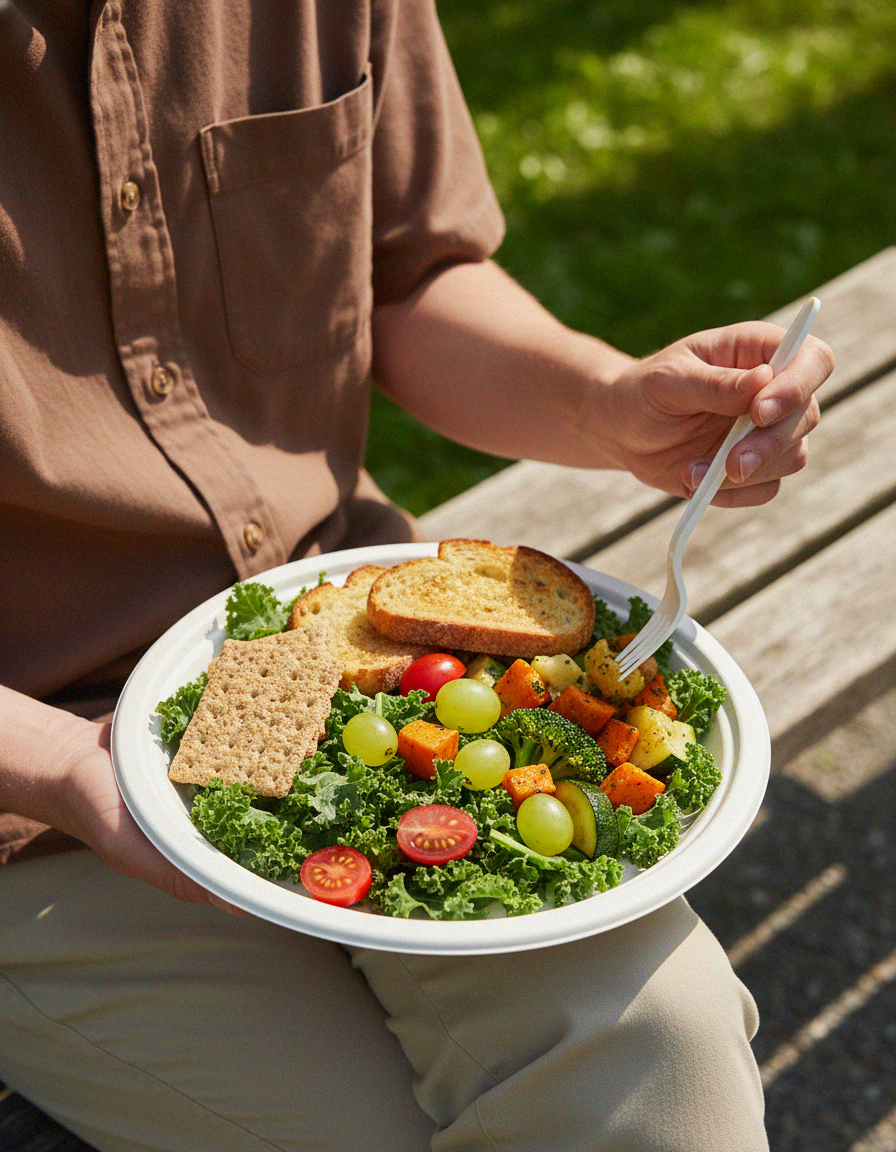
Bagasse plates? They crush this category. Their resistance comes from their dense structure, not a coating—so they’re usually microwave-safe (perfect for reheating leftovers!), handle hot oils and steamy foods with ease, and never get soggy. They’re built for real life—for the meals we actually cook and eat, not just the “perfect” dry snacks.
So when it comes to performance: Bagasse plates are the all-stars for varied, real-world meals—hot, cold, heavy, saucy, you name it. Paper plates are great for light, dry foods, but their performance lives or dies by their coating. It’s all about what you’re serving, and how much hassle you want to avoid.
What Happens After You’re Done With Them?
This is the part that most eco-dinnerware brands gloss over—and it’s the most critical. Choosing an eco-plate means nothing if you don’t know how to dispose of it properly. I’ve seen so many people buy “compostable” plates, throw them in the trash, and think they’re doing good—but that’s not how it works. I know we’re all confused about this—so many people ask about end-of-life options before buying, wondering how to properly dispose of bagasse plates and whether paper plates are truly compostable. Let’s clear this up, once and for all.
First, let’s talk about industrial composting—the gold standard for both materials, if they’re designed for it. Industrial composting facilities have controlled temperatures, moisture levels, and microbes that break down organic materials quickly. A pure bagasse plate is a rockstar here: it breaks down into nutrient-rich soil in just 90-180 days. No coatings, no residue—just dirt that can feed plants.
Paper plates can compost just as well, but only if they have a certified compostable coating (like PLA) and no plastic liners. If they have that standard PE coating or wax, they won’t break down in industrial compost—they’ll just sit there, like plastic. So always look for certifications like BPI or OK Compost INDUSTRIAL on the package. Those labels mean the plate is actually designed to compost, not just greenwashed.
Now, let’s get real about home composting and landfills—because most of us don’t have access to industrial composting facilities. In a backyard compost bin or a landfill, conditions are cooler, wetter, and less controlled. Decomposition slows way down—for both bagasse and paper plates, it can take years instead of months. And here’s the kicker: a paper plate with a PE coating? It will never break down meaningfully. It will just fragment into tiny microplastics, polluting the soil and water. That’s the last thing we want from an “eco-friendly” plate.
And let’s bust a big myth: DO NOT put either bagasse or paper plates in your curbside recycling bin. Food-contaminated dinnerware—even eco-friendly ones—is a major contaminant in recycling streams. It ruins entire batches of recyclables, making them unrecyclable. So save yourself (and the recycling facility) the hassle: recycling is not an option here.
The bottom line here? True sustainability isn’t just about buying an “eco” product—it’s about disposing of it properly. Always check for compost certifications, and find out what your local facilities accept. If you don’t have access to industrial composting, either option will take a long time to break down—but at least a pure bagasse plate won’t turn into microplastics.
So, Which One Should You Choose?
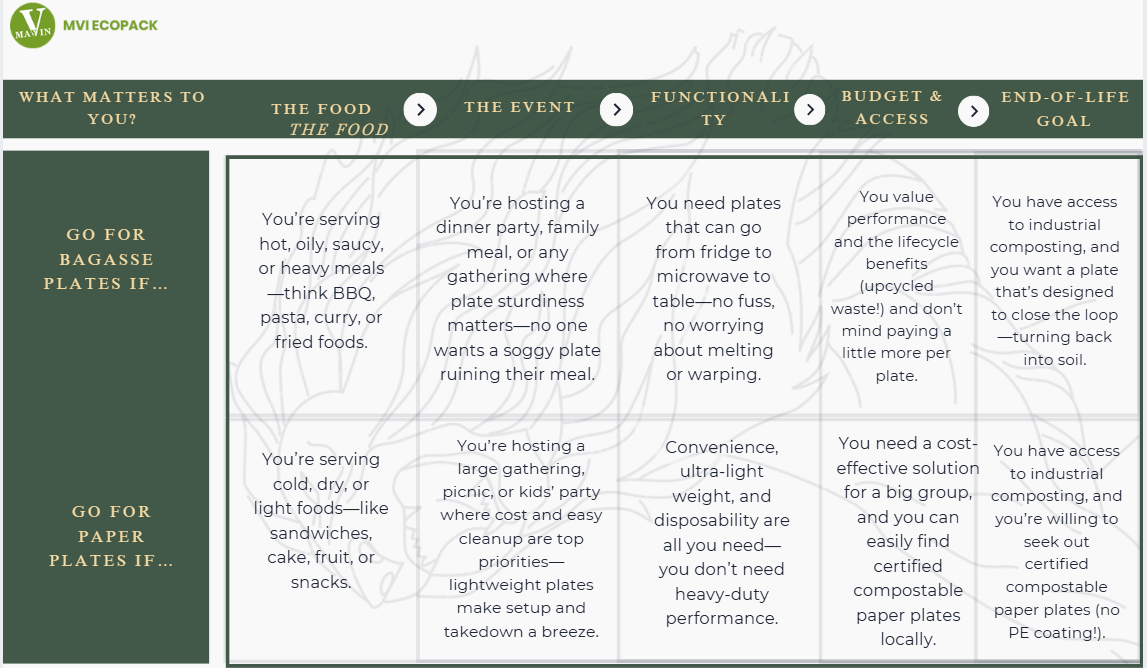
Let’s cut to the chase: It all depends on what you need, what you value, and how you’ll use (and dispose of) the plates. I’ve put together a simple guide to Help you made a decision.
Bagasse Plates vs Paper Plates:Which to Choose?
An informed choice
At the end of the day, the most sustainable choice is the one you’re informed about—and the one you’ll use consistently.
The key isn’t to pick the “perfect” eco-plate—it’s to pick the one that fits your life, and then dispose of it properly. Because every small, informed choice adds up.
|
Want to Achieve Zero Waste for Your Food Service Business? Our professional eco-team offers consulting services to help you develop a comprehensive compostable packaging solution, including home compostable tableware options. Contact us to align your business with sustainable practices and achieve your zero-waste goals together. |

-The End-
|
|
Related Articles:
CAN YOU REALLY HAVE A HAND-FREE, ZERO-WASTE KITCHEN?THE TRUTH ABOUT TRULY COMPOSTABLE PLATE
Sturdy & Truly Compostable? Your Guide to Choosing Bagasse Straws & Dodging Greenwashing
Why Sustainable Bagasse Packaging Is the Future of Food Delivery Industry?

Web: www.mviecopack.com
Email:orders@mvi-ecopack.com
Telephone: 0771-3182966


