+86 15177781985
Kraft Paper Containers For Cafe Beverage Serving: The Sustainable Paradigm Shift
In the rapidly evolving global beverage industry, the demand for sustainable, high-performance packaging has transitioned from a niche marketing trend to a core operational necessity. Kraft paper containers for cafe beverage serving represent the vanguard of this green revolution. As cafes, specialty coffee shops, and quick-service restaurants (QSRs) seek to minimize their carbon footprints, traditional petroleum-based plastics and non-recyclable composite cups are being replaced by bio-based, compostable alternatives. This comprehensive analysis explores the industrial landscape, technological innovations, and diverse application scenarios that make kraft paper containers the premier choice for modern cafe beverage service.
Industry Insight: The global market for eco-friendly foodservice packaging is projected to reach unprecedented heights as regulatory pressures on single-use plastics intensify. Businesses adopting kraft paper containers secure a competitive advantage by aligning with conscious consumer values.
1. The Commercial & Industrial Landscape of Kraft Paper Packaging
The industrial production of kraft paper containers relies on the kraft pulping process, which yields a stronger paper product compared to alternative pulping methods. By utilizing long wood fibers, kraft paper maintains superior structural integrity, tensile strength, and burst resistance. This makes it uniquely suited for handling both hot and cold liquids without structural failure. From a commercial standpoint, the shift toward kraft paper packaging is driven by three main factors: regulatory compliance, consumer preference, and brand equity.
Governments worldwide are implementing strict bans or levies on single-use plastics. The European Union’s Single-Use Plastics Directive (SUPD) and similar regulations across North America and Asia-Pacific have forced cafe operators to seek compliant alternatives. Kraft paper, especially when paired with biodegradable barriers like Polylactic Acid (PLA) or water-based dispersion coatings, offers a fully compliant, compostable solution. Furthermore, consumer sentiment has shifted dramatically; modern coffee enthusiasts actively choose establishments that demonstrate environmental stewardship. Serving premium coffee in a rustic, natural-looking kraft paper cup visually reinforces a brand's commitment to sustainability.
2. Advanced Material Science: Overcoming the Liquid Barrier Challenge
Historically, paper cups required a thin layer of polyethylene (PE) plastic lining to prevent the paper from absorbing liquid and collapsing. However, this PE lining renders the cup extremely difficult to recycle, as specialized facilities are required to separate the plastic film from the paper fibers. To address this, the industry has turned to cutting-edge barrier technologies:
- Polylactic Acid (PLA) Lining: Derived from renewable resources like cornstarch or sugarcane, PLA serves as an excellent moisture barrier for hot and cold beverages. Unlike PE, PLA is commercially compostable, breaking down into organic matter under specific industrial conditions.
- Water-Based Dispersion Coatings: Often referred to as "plastic-free" coatings, these innovative barriers utilize water-based polymer dispersions applied to the paperboard. The coating is absorbed into the paper fibers, providing excellent grease and liquid resistance while allowing the cup to be easily repulped and recycled in standard paper mills.
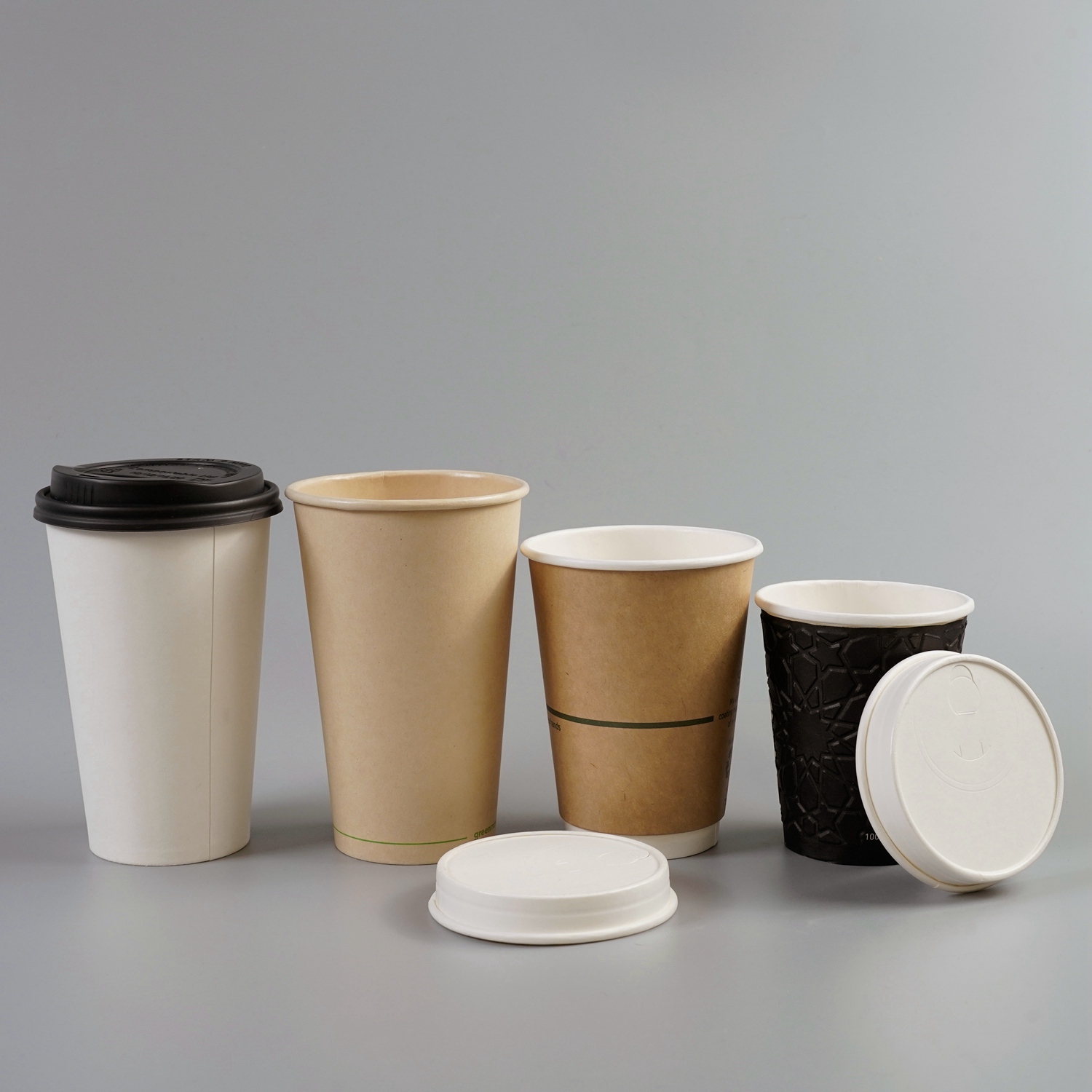
- Bio-based Sugarcane Bagasse Lids: To complement kraft paper cups, manufacturers now offer lids made from bagasse (sugarcane pulp residue) and molded wheat straw. These lids provide a tight, leak-proof seal, replacing traditional polystyrene (PS) hot cup lids.
3. Deep-Dive Application Scenarios in Modern Cafes
Kraft paper containers are incredibly versatile, designed to meet the rigorous demands of various beverage serving scenarios:
Hot Coffee and Tea Service
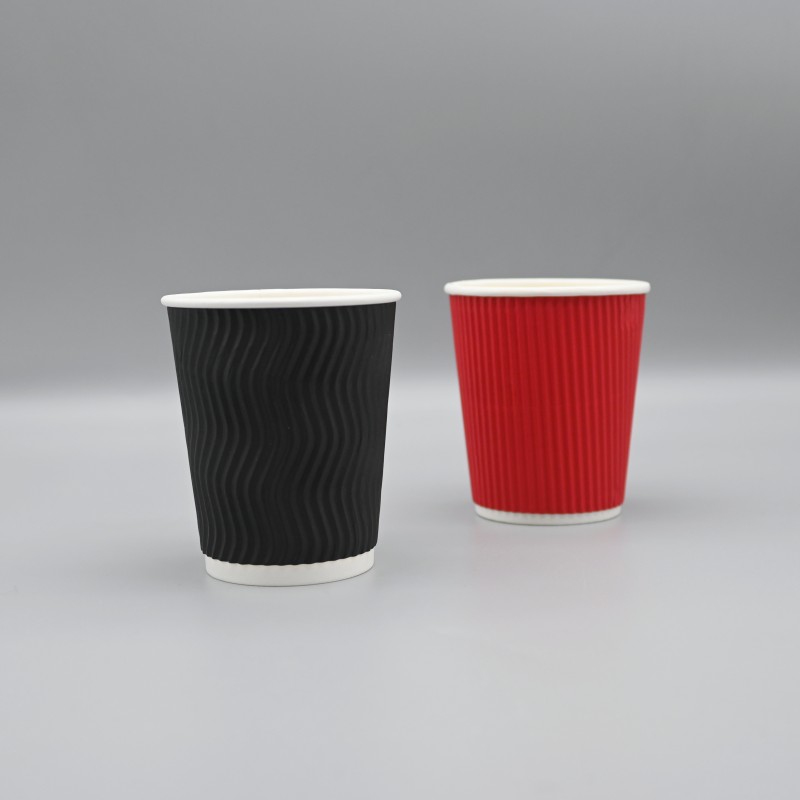
Serving hot beverages at temperatures ranging from 80°C to 95°C requires exceptional thermal insulation. Double-wall and ripple-wall kraft paper cups are engineered with an insulating air pocket between the inner and outer paper layers. This design keeps the beverage hot while ensuring the outer surface remains comfortable to hold, eliminating the need for separate cardboard sleeves. The natural kraft finish also resists heat discoloration, maintaining a clean, premium appearance throughout the customer's drinking experience.
Iced Beverages and Cold Brews
Cold drinks present a different challenge: external condensation. When warm, humid air contacts a cold cup, moisture forms on the exterior, which can soften standard paper. Kraft paper containers designed for cold drinks feature double-sided barrier coatings (either PLA or water-based) to protect the structural integrity of the cup from both the inside liquid and outside condensation. These cups are ideal for iced lattes, cold brews, and specialty iced teas.
Specialty Cafe Delicacies & Desserts
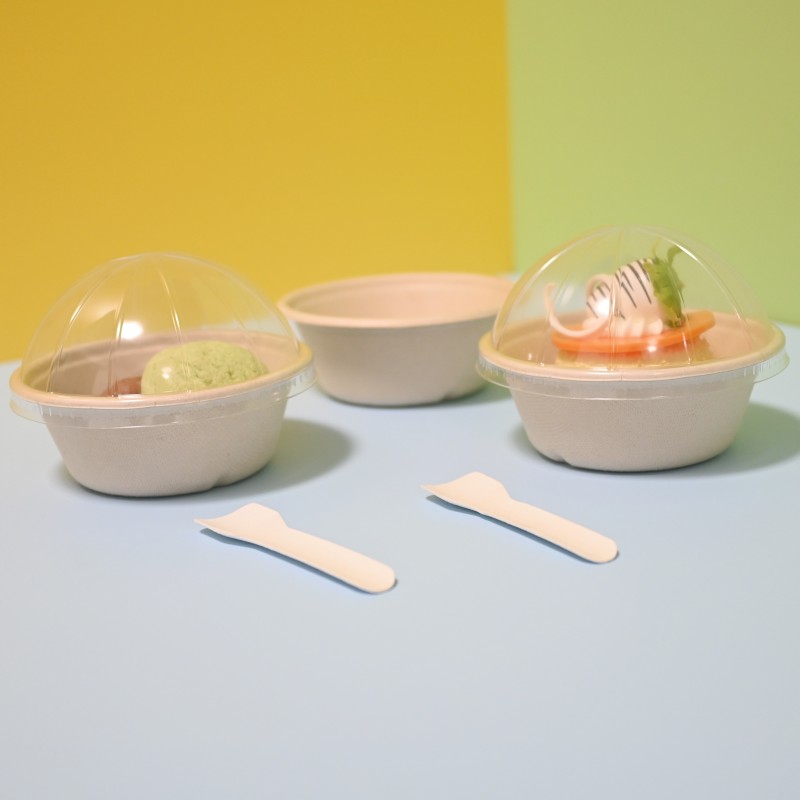
Beyond traditional cups, cafes utilize kraft paper containers for serving ice cream, gelato, affogatos, and hot soups. These wide-mouth tubs are engineered to withstand freezing temperatures without becoming brittle, as well as high temperatures without leaking. Paired with compostable sugarcane or PLA dome lids, they provide a secure takeaway solution for multi-component desserts.
4. Future Trends: Smart Packaging and Circular Economy Integration
As we look to the future, the integration of technology and packaging is set to redefine the cafe experience. We are seeing the rise of smart packaging, where QR codes printed with soy-based inks on kraft cups allow consumers to trace the origin of the paper fibers, verify compostability certifications, and even calculate the carbon offset of their purchase. Furthermore, automated manufacturing lines are utilizing AI to optimize paper usage and minimize waste during the die-cutting process, driving down production costs and making eco-friendly packaging more accessible to small, independent cafe owners.